Introduction
Between late January and February 2026, a modest contingent of Malawian educators convened at the Malawi Institute of Education (MIE) to develop curriculum frameworks for Arabic, Swahili, Portuguese, and Chinese language instruction in secondary schools. This initiative, part of broader curriculum reforms aligned with Malawi 2063, represents an ambitious expansion of linguistic offerings in a nation already grappling with profound educational resource constraints. While multilingualism possesses inherent value, this paper questions whether curriculum expansion through the introduction of additional foreign languages constitutes sound educational policy for Malawi's development trajectory. Drawing on principles of human capital theory, resource allocation economics, and sociolinguistic research, I argue that Malawi's educational priorities require critical reassessment before committing scarce resources to languages of uncertain developmental utility.
Lessons Unlearned
Before embracing new linguistic horizons, Malawi must confront uncomfortable realities regarding existing language instruction. French and Latin – languages formally included in the national curriculum for decades – remain marginal offerings in actual school practice. A 2023 survey by the Ministry of Education indicated that fewer than 30 secondary schools nationwide offered French instruction, representing less than 5% of Malawi's approximately 800 secondary institutions. Latin instruction exists almost exclusively in elite private schools and select mission schools, serving perhaps 2-3% of the secondary school population.
These statistics reveal what sociolinguist James Tollefson terms “language policy-planning disjunction”—the gap between official curriculum documents and implemented practice. As Tollefson argues in Planning Language, Planning Inequality, “language policies often reflect elite aspirations rather than grassroots realities.” The persistence of French and Latin in curriculum documents while remaining absent from most classrooms suggests that curriculum expansion proceeds independent of implementation capacity.
The Employment Paradox
Perhaps the most sobering reality confronting Malawi's linguistic expansion is the disconnect between English language competence and economic opportunity. English—the nation's official language and medium of secondary and tertiary instruction—enjoys privileged status in Malawian education. Yet proficiency in English provides no immunity against unemployment. Walk through any urban centre in Malawi, and one encounters university graduates—articulate in English, possessing sophisticated vocabularies—manning market stalls, driving minibuses, or languishing in protracted unemployment.
The 2024 Labour Force Survey by the National Statistical Office documented youth unemployment at 20.3%, with even higher rates among secondary and tertiary certificate holders. As development economist Daron Acemoglu notes in Why Nations Fail, "education creates human capital, but human capital requires economic structures to absorb it." Malawi's economy – characterized by limited formal sector employment, constrained manufacturing capacity, and predominantly subsistence agriculture – cannot absorb even English-proficient graduates. What magical economic transformation will Arabic, Swahili, Portuguese, or Chinese proficiency catalyse? The quality and relevance of education matter more than years of schooling or specific subject offerings. Malawi's challenge is not linguistic deficiency but structural economic constraints that render educated youth economically superfluous.
The Resource Allocation Dilemma
Malawi's educational system suffers profound resource deficits. The 2023/24 Education Sector Performance Report documented teacher-student ratios exceeding 1:80 in many Community Day Secondary Schools; science laboratories functioning without basic equipment; libraries existing only as empty rooms; and textbook-student ratios of 1:5 or worse. How does introducing Chinese language instruction expand capabilities when students lack functional mathematics competence or scientific literacy?
Teachers We Lack
Even assuming the developmental utility of Arabic, Swahili, Portuguese, and Chinese instruction—an assumption I contest—Malawi lacks qualified instructors for these languages. The few teachers assembled at MIE for curriculum development represent an infinitesimal fraction of the thousands required for nationwide implementation. Where will these teachers originate?
Educational researcher Linda Darling-Hammond's work emphasises that "teacher quality constitutes the single most important school-based factor affecting student achievement." Yet Malawi struggles to recruit qualified secondary school teachers. A 2024 Ministry of Education audit revealed critical shortages: 1,200 unfilled mathematics teaching positions, 800 vacant science posts, and chronic shortages in technical and vocational subjects. As economist William Easterly observes in The Tyranny of Experts, development initiatives often fail by ignoring "the binding constraints"—the most critical limiting factors. In Malawian education, the binding constraint is qualified teachers for core subjects, not linguistic diversity. Training teachers for new language subjects requires substantial investment: specialised coursework, immersion experiences, ongoing professional development. Malawi’s teacher training institutions—already struggling to cope with existing demands—lack capacity for this expansion.
The Beneficiary
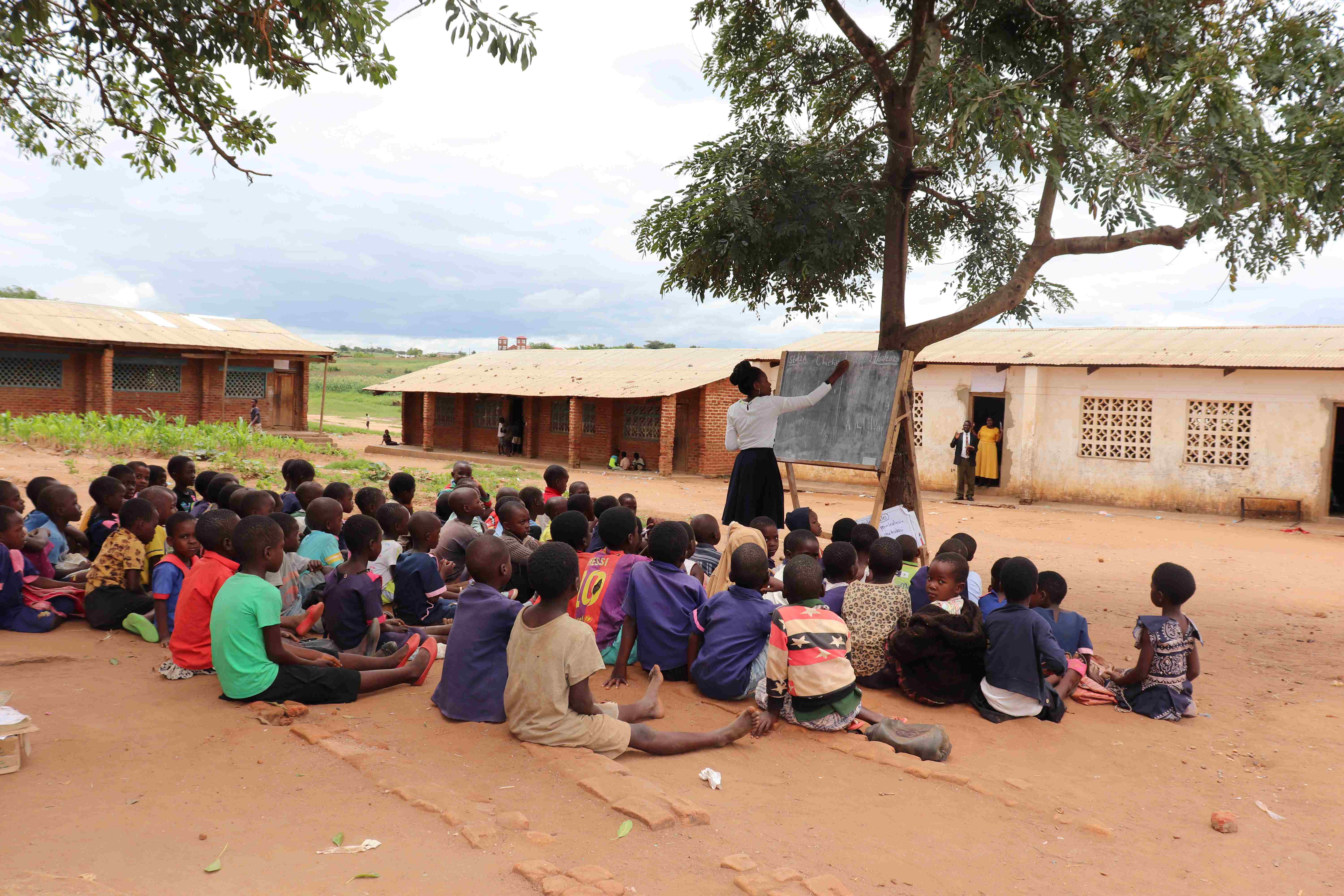
Critical analysis of educational policy requires asking what political scientist Harold Lasswell termed the fundamental question of political economy: "Who Gets What, When, How?" If Malawi implements comprehensive instruction in Arabic, Swahili, Portuguese, and Chinese, who benefits? Elite urban schools such as St. Andrew's International, Bishop Mackenzie and Kamuzu Academy possess resources to offer diverse language instruction. Their students, predominantly from privileged backgrounds, gain additional credentials, enhancing their competitive advantage for international scholarships and elite career pathways. Meanwhile, the rural Community Day Secondary School in Nsanje District, lacking basic textbooks and functional laboratories, receives curriculum documents mandating language offerings they cannot possibly implement.
This dynamic perpetuates what sociologist Pierre Bourdieu referred to as “cultural capital reproduction”—educational systems that reinforce existing inequalities by providing elite children access to prestigious knowledge while excluding disadvantaged children. Brazilian educator Paulo Freire warned against such educational projects, arguing in Pedagogy of the Oppressed that authentic education must serve liberation, not domination. When educational policy creates opportunities accessible only to privileged minorities while ignoring the fundamental needs of the majority, it becomes what Freire termed "education for domestication."
The Donor Dependency Trap
Malawi’s enthusiastic embrace of new language curricula likely reflects donor-driven pressures such as Chinese diplomatic initiatives promoting Mandarin instruction globally, Arab countries funding Islamic educational programmes, and Lusophone nations supporting Portuguese language spread. Development scholar William Easterly's critique of aid effectiveness warns that “aid agencies pursue their own agendas, not recipient country priorities.” In The White Man's Burden, Easterly argues that sustainable development requires "searchers" responding to local realities, not "planners" imposing external blueprints. In Dead Aid, Moyo argues that excessive aid dependency perpetuates underdevelopment by substituting external agendas for domestic priorities. Educational sovereignty requires asserting national priorities: If Malawi determines that strengthening mathematics, science, and technical education serves developmental needs more effectively than multilingual expansion, donor preferences must not override this judgment.
What Malawi Actually Needs Rather than dissipating resources across additional language subjects, Malawi's educational system needs not additional linguists but electricians, plumbers, automotive technicians, agricultural extension workers and construction craftspeople. Yet technical education remains grievously underfunded and stigmatised.
As Malawi pursues the aspirations articulated in Malawi 2063, its educational policy must serve national development, not donor agendas or elite preferences. This requires asking difficult questions: What knowledge and skills do Malawian youth genuinely need? What can our educational system realistically deliver? Whose interests does curriculum expansion serve?
Paradoxically, while introducing foreign languages, Malawi neglects developing indigenous languages—Chichewa, Chitumbuka, Chiyao, and others—as academic and technical languages. Sociolinguist Ngugi wa Thiong'o's advocacy for African language development in Decolonising the Mind emphasises that authentic intellectual independence requires thinking in indigenous languages, not perpetually translating through colonial linguistic frameworks.
Category:
Ruminations