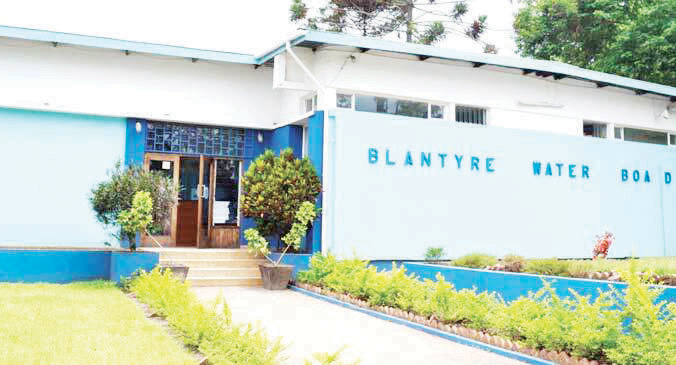
Parastatals, also called statutory corporations, State Owned Enterprises (SOEs), State Owned Organizations (SOOs), Public Sector Organizations (PSOs) or State Run Enterprises (SREs), are firms established by Acts of Parliament to help government in the provision of public services or social services. According to I. S. Babaita (2001), there are two broad types of Parastatals — commercial and non-commercial. The first category of Parastatals generate revenue from the services they offer. In Malawi, examples of this category are Electricity Supply Commission of Malawi (ESCOM), Electricity Generation Company (EGENCO), Malawi Revenue Authority (MRA), Blantyre Water Board (BWB), and Southern Region Water Board (SRWB). Non-commercial Parastatals provide social services without generating revenue. Among them are Technical, Entrepreneurial and Vocational Education and Training Authority (TEVETA), National Audit Office (NAO), and Malawi National Examinations Board (MANEB).
For many years, it has been evident that most Parastatals in Malawi register poor performance, posting losses every year and delivering poor services to the people of Malawi. Some State-owned enterprises have at some point been bailed out by Government Treasury. To the taxpayer's chagrin, however, the Managers of these enterprises consistently receive hefty remuneration packages in spite of their underperformance. In the public sector, performance would appear not to matter too much.
Why Parastatals Underperform
The legacy dismal performance of Parastatals in Malawi can be chalked up to three main factors. First, political interference.
It is common knowledge that political parties in government routinely meddle in the daily administration of State-owned enterprises, leaving Managers little leg room to run the affairs of these entities on the basis of sound business principles and industry best practices.
This leads to poor decision making and strategy execution. Influential politicians may, for instance, impose cost-ineffective suppliers on an enterprise, escalating operational costs and undermining efficient service delivery. There have also been allegations of political parties fleecing Parastatals to finance party activities.
The second factor is lack of merit-based appointments. The appointments of Chief Executive Officers (CEOs) and Boards of Parastatals are not primarily based on competence, qualification or meaningful experience. Rather, they are predicated on personal loyalty, political affiliations and social debt. It is an open secret that a lot of lobbying and intercession, redolent of the proverbial 'Remember-me-in-your-kingdom' syndrome, goes on behind the scenes before the appointments are made. Some of the appointees would have contributed to political campaigns.
The theory of social exchange states that when one receives a gift today, one is morally obliged to reciprocate at a later date. Failure to reciprocate renders the recipient persona non grata. Writing on social networks back in 1956, Peter M. Blau made the following observation: "If you invite me to dinner, I am obligated to reciprocate, but you do not know when I will, how I will, or whether I will at all, though if I do not, or do so too late, or too soon, my standing in your eyes will suffer." Board appointments are thus viewed as convenient payback mechanisms consistent with the logic of reciprocity. Back in 2000, British political scientist Roger K. Tangri published an instructive book titled The Politics of Patronage in Africa: Parastatals, Privatization and Private Enterprise which highlighted political patronage as a key driver of corruption in African governments.
Over the years, we have seen how some underperforming, even corrupt, characters have repeatedly been appointed CEOs of one State enterprise after another, simply because they are politically connected.
Ravaged by the plague of amnesia, Malawians send adulating congratulatory messages to such boomerang CEOs brandishing laundered profiles decorated by foreign-earned qualifications that look perfect only on paper.
The third factor is a weak — read absent — sense of ownership of Parastatals. In Malawi, government property (za boma) is seen not to belong to anybody and can therefore be dissipated or misappropriated without any sense of accountability. This mentality is entrenched by the fact that those who abuse public resources are routinely left scot-free. Indeed, without stringent consequence management frameworks, those placed in charge of Parastatals have little incentive to conduct themselves professionally.
There seems to be an unwritten social contract in Malawi that if you land a job in the public sector, you should enrich yourself and your cronies with public resources.
Unfortunately, even young people are falling for this warped logic. In 2016, a survey carried out by the Aga Khan University in Kenya found that many young Kenyans would not mind acquiring wealth through corrupt means. It is likely that Malawian youth would think no differently.
Way Forward
To enhance productivity in Malawian Parastatals, we must implement several measures. First, we must depoliticize State-owned enterprises. This means that political interference must be rooted out of all public sector organizations. Parastatals must be allowed to operate on the basis of the principles of sustainability, accountability and professionalism.
Second, Board appointments must be based on merit. To wit, Board members must not be appointed by the Office of President and Cabinet (OPC). There must be an independent body to oversee the appointment of CEOs and Boards, ensuring that people are appointed on the basis of their qualification, competence and experience. The membership of the independent body should be broad-based, encompassing civil society, the business community and academia. The position of the CEO should be advertised and formal vetting processes be followed to identify the suitable candidate. It would be desirable for the interviews to be conducted publicly, for instance through a live broadcast.
Finally, both the CEO and the Board should be given performance targets, and these should be communicated to the general public via the print media. One of the reasons Parastatals get away with underperformance is that nobody, perhaps except the President, knows their key performance indicators (KPIs). Once the KPIs are set and communicated, they must be tracked on a quarterly basis. This robust cadence of accountability, to borrow Chris McChesney's four disciplines of execution, would put Parastatals on their toes and galvanize them into productivity.
Conclusion
State-owned enterprises are a critical tool of government. Every year, the Government allocates a large proportion of taxpayers' money to these enterprises so they can deliver the expected services. It is therefore incumbent upon Parastatals to use such resources efficiently and transparently for the good of the country.