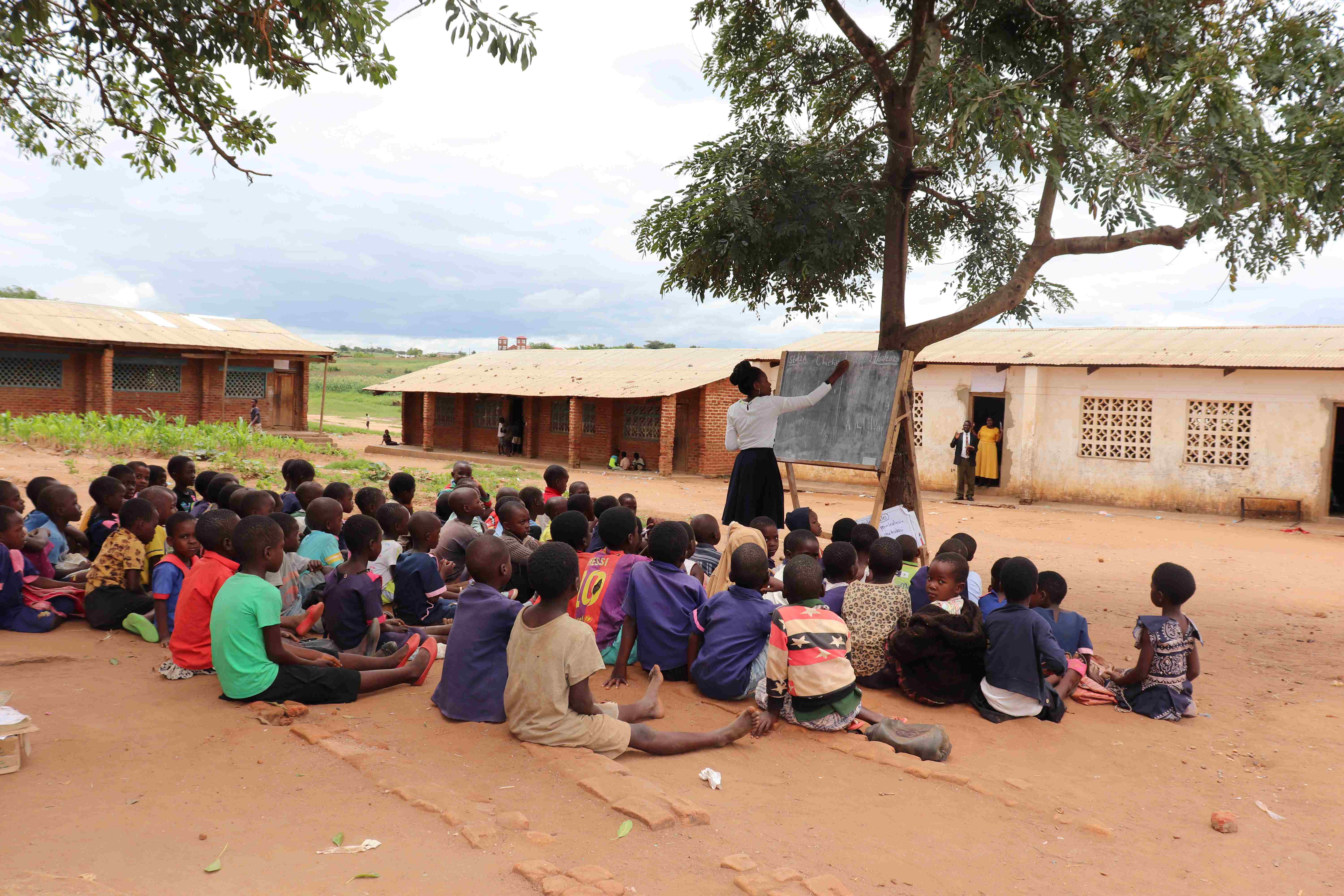
A few days ago, newspapers waxed lyrical about one Duwana Muhammad, a 16-year-old girl who was the lone female Primary School Leaving Certificate examinations candidate at Mangale Primary School in Mangochi District. An obvious question is: what happened to the other girls who started Standard 1 with Duwana? A likely answer is that they dropped out. Why did they drop out? One would have to undertake ground research to establish the reasons for their decision to discontinue formal education. But one can conjecture that, since primary school is free, the other girls probably dropped out to respond to the demands of the present moment, including marriage.
This anecdote illustrates how education is attended by the tension between the present and the future. Modern society largely views education as preparation for the future. Many parents and teachers constantly exhort the youth to embrace discipline and focus on acquiring knowledge and mastering skills to be deployed in future engagement. On this score, education comes across as the suspension of activities that yield results and satisfaction in the present in preference for activities whose outcomes will possibly materialise in the future. But is it necessary to sacrifice the present for the future? This essay reviews Friedrich Daniel Ernst Schleiermacher's understanding of pedagogy as the reconciliation of the present and future and how this approach to education could strengthen student engagement.
Brief Notes on F.D.E. Schleiermacher
Friedrich Schleiermacher (1768–1834) was born in Breslau (in present-day Poland) to Gottlieb Schleiermacher, then serving as chaplain in the Prussian army, and Maria Catharina. Friedrich Schleiermacher is largely known for his writings in Protestant theology (he was a pastor), hermeneutics, and his philosophy of language and translation. He also contributed extensively to the development of the theory of education in then Prussia, dialoguing with thinkers such as Johann Friedrich Zöllner, especially on the question of national education. In 1808, he published Thoughts on Education in which he explored, among other things, the relationship between the university and the state (Becks, 2022, p. 59).
Schleiermacher's Critique of Education as the Sacrifice of the Present
Schleiermacher delivered three lectures on pedagogy at the University of Berlin, one of which focused on education as an art (cf. Outlines of the Art of Education, translated by N. Friesen & K. Kenklies). According to Schleiermacher, education is the interaction between younger and older generations in which the latter impart on the former principles and skills of life. In other words, education is a reflection of the vision of older generations for the youth. It follows, then, that education consists in exerting external influence on the youth with a view to forming (Bildung) their spirit and intellect. Through education, the community not only passes on its knowledge and skills to the young but also projects itself into the future.
Education as the exertion of external motivation is the first source of tension in those being educated. The tension stems from the fact that the youth also desire to pursue interests aligned with their internal motivations. From this standpoint, education is understood as the sacrifice of one's will at the altar of the community's will. To be sure, the external influence reduces as one matures. As Schleiermacher finds, "at the beginning of life, external influences greatly exceed any internal developmental force" because a child is not capable of self-direction.
Schleiermacher also notes that education presents a second tension — that between the present and the future. He writes: "Every pedagogical influence presents itself as the sacrifice of a present moment for a future one." Schleiermacher, however, does not agree with the binary opposition between the present and the future, for sacrificing the present at the altar of the future undermines the effectiveness of the education process. He is persuaded, rather, that effective pedagogy consists in aligning the present of a student with the future.
That life activity, which has its relation to the future, must at the same time find satisfaction in the present; in the same way, every pedagogical moment that, as such, is related to the future has to provide satisfaction for the individual as he or she is in the moment.
When the present is reconciled with the future, education becomes "a series of moments of satisfaction." Schleiermacher gives the example of play as an activity oriented toward present satisfaction, while exercise is for future benefit. Effective pedagogy thus involves making play an integral part of exercise so that the child enjoys the activity all the while developing capacities for the future. In contemporary parlance, this is called gamification.
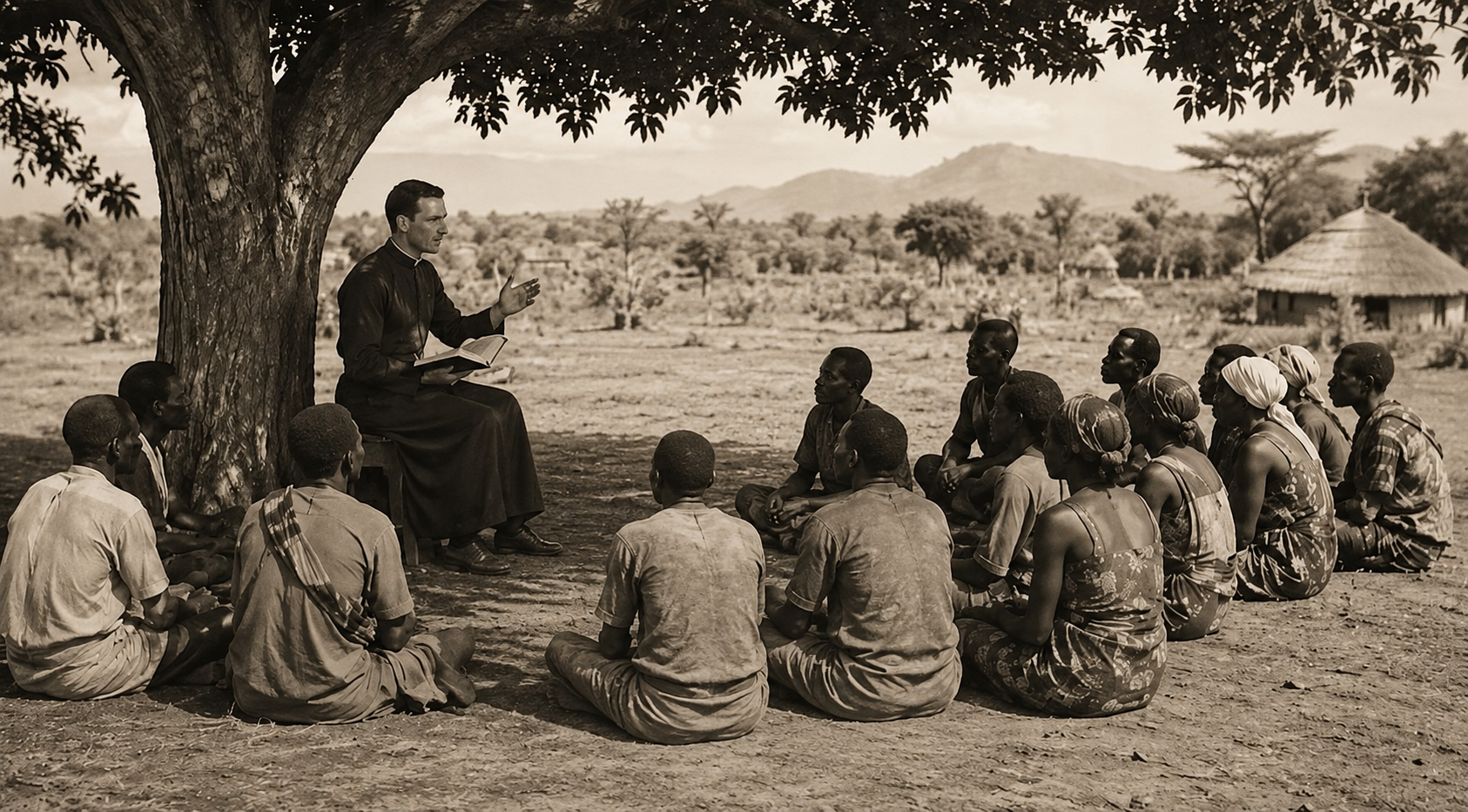
With this arrangement, internal and external sources of the moral life are reconciled, the future is already in the present, and the promise is received in reality, albeit imperfectly. Schleiermacher finds support in traditional approaches to education. In traditional societies, where education took place in the context of the family, educational activities were never separated from other aspects of children's lives. This means that the youth were never completely severed from the present demands and exigencies of their family. In modern society, however, education has become institutionalised and now takes place outside the sphere of the household.
Schleiermacher's position resonates with that of John Dewey who, in Education and Experience (1938), advances — on the basis of the concept of experiential continuum — the view that education as preparation for the future should not be construed as necessitating the sacrifice of the present.
When preparation is made the controlling end, then the potentialities of the present are sacrificed to a suppositious future. When this happens, the actual preparation for the future is missed or distorted. The ideal of using the present to get ready for the future contradicts itself. — John Dewey, Education and Experience (1938, p. 49)
He adds that not everything one studies is useful for the future. In fact, excessive focus on the future makes teachers inattentive to the present experiences of students. Chapter Three of the book closes with the lapidary statement: "Education as growth or maturity should be an ever-present process" (p. 50).
Implications for Student Engagement
Schleiermacher's pushback on the conventional conception of the nature of education as necessitating the sacrifice of internal motivation and the present can be brought to bear on strategies for strengthening student engagement.
Vicki Trowler (2010) defines student engagement as the optimisation and enhancement of the student experience, development, and learning outcomes through effective interaction between the time, effort, and other resources available in the educational context. Another definition (Glossary of Educational Reform) describes student engagement as the extent to which learners manifest attention, curiosity, interest, optimism, and passion during the learning process. Some scholars identify three dimensions of student engagement.
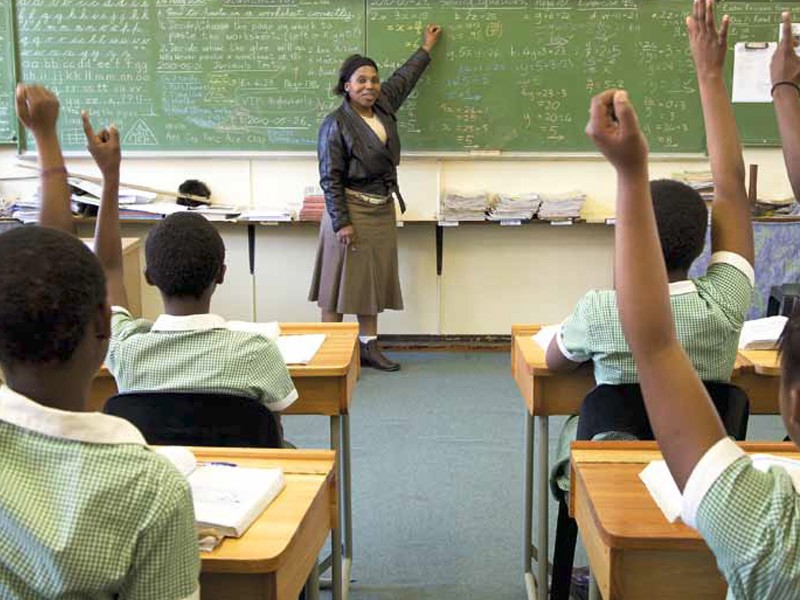
Behavioural engagement involves compliance with prescribed behavioural norms, such as attendance and participation. Emotional engagement is measured by students' interest, enjoyment, and sense of belonging to a learning community. Cognitive engagement is manifested in students' investment in the learning activity, often going beyond the minimum requirements (Trowler, 2010). Student engagement influences student attendance, task completion, student retention, and student progression (cf. S. Addis, R. McNulty, & T. Hawkins, 2024).
Student engagement is a function of a number of variables. The first is students' perception of the value of what is taught, where value means benefit. The more immediate the benefit, the higher the engagement. This is especially the case in short-term oriented cultures. Also, the younger the learner, the more they seek immediate benefits. In the 1960s and 1970s, Stanford University Psychology professor Walter Mischel conducted what is commonly known as the marshmallow experiment, which illustrates that it takes extraordinary self-restraint for children to postpone gratification. For 21st-century university students, the marshmallow in the classroom is the mobile phone: when students find a lecture boring, they quickly reach down to their phone and start clandestinely enjoying social media content.
For poor communities, the search for livelihood in the present moment often trumps the pursuit of purported future benefits of education. Therefore, an effective teacher will endeavour to tailor education also to the present needs of students, instead of merely promising pie in the sky. For example, students can already earn money by leveraging their knowledge through funded community projects and consultancies commensurate with their level of education.
The second driver of student engagement is relevance. Education is relevant if it speaks to students' lived experience. Relevance engenders existential consistency and overcomes the fragmentation of the self (existential lesion) across variegated spaces. Children who live in slums will find education interesting if it takes into consideration their slum experience rather than pass it over under the pretext of a standard curriculum. Examples and assignments can be generated from students' lived experience, à la Paolo Freire's problem-posing and humanising education. Such efforts can strengthen students' ownership of the education process, minimising the feeling of external influence.
Conclusion
As an exercise in influence, education requires clear strategies for sustaining student engagement. In the age characterised by attention deficit, appealing to future benefits of education may not suffice to elicit and sustain students' interest in learning. Schleiermacher's rebuttal of the excessively future-oriented conception of education exposes a major factor contributing to school dropouts. Therefore, teachers at Mangale Primary School in Mangochi have the unenviable task of retaining the girl child by showing her the benefit and relevance of education — not only in the remote future, but also in the present moment.