In 2024, the World Food Programme estimated that over 4.4 million Malawians faced acute food insecurity, while the country's Gross Domestic Product (GDP) per capita remained among the five lowest globally. Decades of structural adjustment programmes, aid dependency, and governance reforms have failed to move the needle decisively on poverty. Development economists debate infrastructure gaps, agricultural productivity, and institutional quality. Politicians debate corruption and donor relations. Yet almost nobody asks the historical question: What happened to the systems that fed the poor before the state arrived? This article argues that the answer to that question holds significant implications for Malawi's national development strategy. The "economy of affection"—kinship-based, reciprocal networks of solidarity that historically undergirded survival in communities like Chingawa Village in Balaka District—was not a romantic relic of precolonial life. It was a functioning, distributive welfare system. Its erosion under colonial capitalism was not inevitable; it was engineered. And the failure of the postcolonial Malawian state to consciously protect, adapt, and institutionalise these networks represents one of the most consequential, yet least debated, development policy failures in the country's history.
Beyond the Capitalism vs. Affection Binary Opposition
The dominant framing of this subject, as exemplified in Hyden's foundational contributions (1980, 1983), presents capitalism and the economy of affection as structurally incompatible systems. Hyden argues that African peasant economies remain partially "uncaptured" by capitalism precisely because informal solidarity networks allow households to exit market relations during crises. This framework has been widely applied but also increasingly critiqued for its implicit suggestion that African informal economies are residual, transitional, or pre-modern phenomena destined to be absorbed by capitalism.
This article departs from that binary. Drawing on Putnam's (1993) concept of social capital and its application to development contexts by Woolcock and Narayan (2000), it argues that solidarity networks constitute a form of productive social infrastructure. The question is not whether capitalism will eventually displace the economy of affection, but whether African states can harness both systems in a deliberate developmental synthesis. Mkandawire (2001) argues convincingly that African developmental states must work with, rather than against, the social formations inherited from precolonial and colonial periods. This article applies that insight to Malawi specifically.
Furthermore, the article draws on feminist political economy, particularly the work of Boserup (1970) and Kabeer (1994), to illuminate the gendered dimensions of solidarity erosion. Women—as the primary managers of chidyerano, mbumba networks, and communal food systems—bore disproportionate burdens when these institutions collapsed, yet their roles have been systematically invisible in mainstream development policy.
Karl Marx's analysis of primitive accumulation remains relevant here. Colonial taxation, land alienation, and forced commodification did not simply introduce a new economic system; they violently severed social bonds that had historically managed poverty and vulnerability. Understanding this history is prerequisite to imagining its reversal.
How Colonialism Dismantled Solidarity in Balaka District
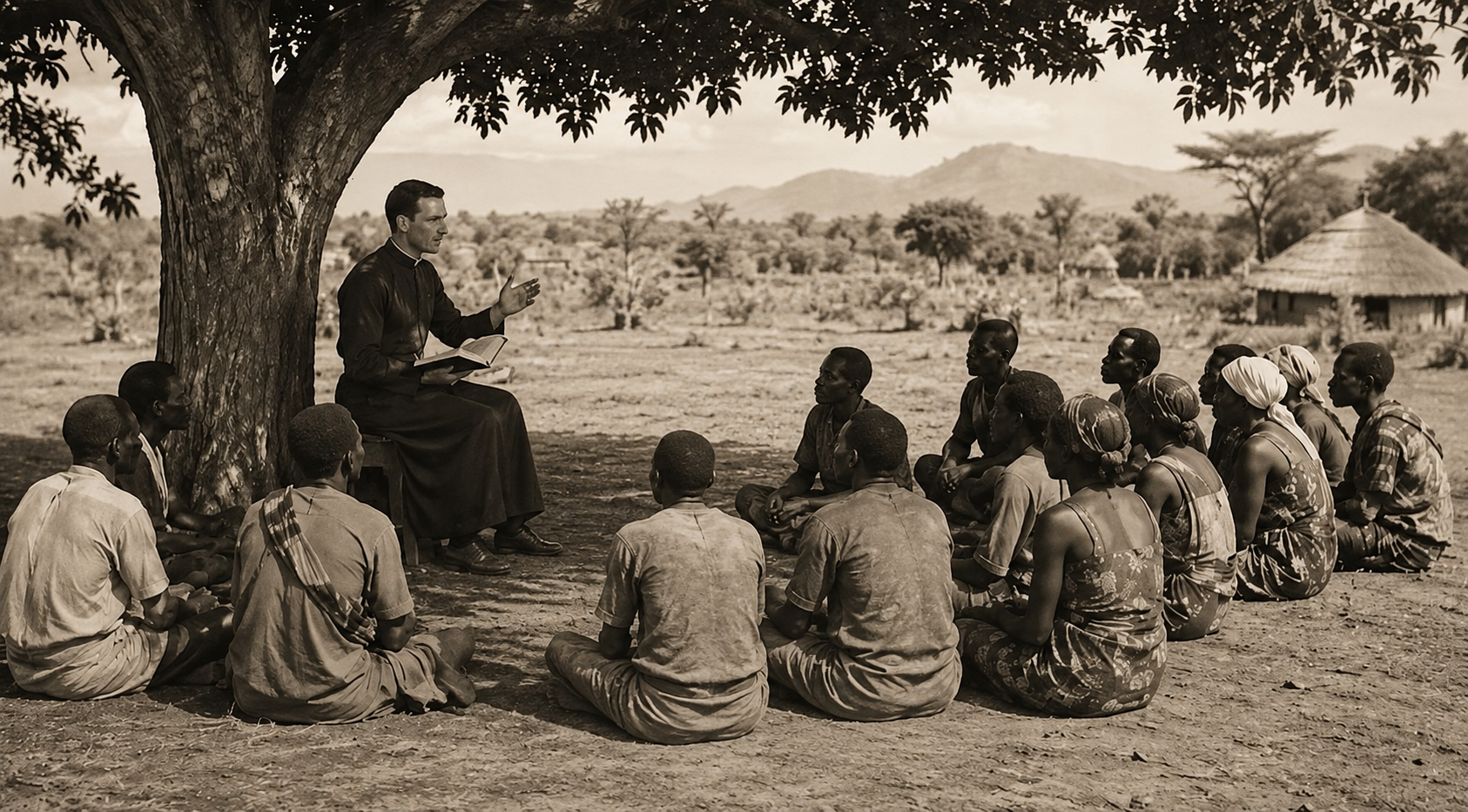
Before the arrival of British colonial authority in Nyasaland, communities in Balaka District operated what can be described as an indigenous welfare state. Land was communally governed under customary law administered by chiefs, and seasonal agricultural labour was organised cooperatively. The institution of chidyerano, in which the mbumba gathered at the bwalo to share food without discrimination, ensured that households facing food deficits were protected from starvation and social exclusion. Widows, orphans, and the elderly were not residual social problems to be managed; they were embedded within networks of obligation that guaranteed their basic subsistence.
Colonial capitalism systematically dismantled these structures through four interconnected mechanisms. First, poll taxation compelled households to produce cash or provide wage labour, redirecting productive time from communal subsistence agriculture toward monetised activities. Second, the commercialisation of agriculture transformed land and labour from communally governed resources into commodities, creating economic differentiation among households previously bound by egalitarian solidarity norms. Third, labour migration—which by the 1940s drew significant numbers of Balaka men to plantations in Zimbabwe and mines in South Africa—physically fragmented the kinship units that gave solidarity its operational structure. Fourth, colonial infrastructure development, including the Balaka-Limbe railway, integrated the district into regional capitalist markets, accelerating dependence on commodity exchange at the expense of reciprocal production.
Vaughan's (1987) study of famine in colonial Malawi is instructive here. She demonstrates that during the 1949 famine, the mortality toll was highest precisely in areas where communal food-sharing obligations had been most thoroughly disrupted by colonial economic penetration. The famine was not primarily caused by food shortage—it was caused by the destruction of the distributive mechanisms that had previously prevented shortage from becoming starvation. Feeding others was no longer an obligation; it had become a luxury. People increasingly ate alone, in the dark and secretly—a devastating inversion of the communal ethics that chidyerano had embodied.
By the 1950s, the collapse of chidyerano in Chingawa Village was well advanced. Oral testimonies from Balaka confirm that formerly communal farming seasons became increasingly individualised, with households consuming food privately and treating neighbours as strangers rather than kin. Kinship ties that had once extended reciprocal obligation across an entire village contracted into the nuclear household unit, stripping away the informal safety net that had historically protected the poor.
The State's Unfinished Business
The political independence of Malawi in 1964 did not reverse the structural damage to solidarity economies. On the contrary, postcolonial development policy largely inherited and deepened colonial assumptions about the superiority of market-based welfare over indigenous solidarity. The Banda regime's promotion of estate agriculture, for instance, accelerated land concentration and labour commodification in precisely the districts where solidarity networks had been most severely eroded. Structural Adjustment Programmes (SAPs) imposed by the International Monetary Fund and World Bank in the 1980s and 1990s further dismantled public welfare provisions without restoring the communal safety nets that had previously filled welfare gaps.
Urbanisation deepened the fragmentation. As young men and women migrated to Blantyre's Ndirande township and to Lilongwe in search of wage employment, the population base that sustained communal institutions in villages like Chingawa dwindled. Remittances partially substituted for lost communal support, but they were irregular, individually targeted, and incapable of replicating the collective insurance function of institutions like the mbumba. Women whose husbands failed to remit—a growing phenomenon as urban economic insecurity increased—became structurally exposed to destitution in ways that would have been unusual in the pre-capitalist solidarity economy.
Globalisation has added a further layer of complexity. Mobile phone technology, which now reaches even remote districts like Balaka, has created new forms of informal financial solidarity through mobile money transfers and digital savings groups. These digital adaptations of traditional solidarity practices suggest both the resilience and the transformability of the economy of affection. Yet they also reflect the privatisation of solidarity: support is now exchanged between individuals through commercial platforms rather than through communal institutions that distribute resources across an entire village.
The persistence of solidarity practices—in funeral contributions, village savings groups (known locally as chilimba), church welfare networks, and seasonal communal labour arrangements—testifies to what Bayart (1993) calls the enduring "politics of the belly": communities continuously find informal ways to manage survival that the formal state has abandoned. This resilience is remarkable. But it is not a substitute for policy.
From Nostalgia to Strategy: Practical Proposals for Malawi
The central argument of this article is that the economy of affection should not be treated as a sociological curiosity or a development obstacle, but as an under-utilised national asset. The following proposals are offered not as utopian prescriptions, but as evidence-informed policy directions that the Government, civil society, and development partners should urgently consider.
Institutionalise Community Solidarity Councils at the Village Level
The Village Development Committee structure established under Malawi's decentralisation framework provides an existing architecture that could be repurposed to formally recognise and support indigenous solidarity institutions.
Government should mandate the inclusion of mbumba and chilimba group representatives in Village Development Committees, giving communal solidarity networks formal standing in local development planning.
Modest public funding—even MK 50,000 per quarter per village—channelled through Community Solidarity Councils could activate and sustain practices like communal food stores, seed banks, and labour exchange systems that currently operate invisibly and without institutional support.
Create a National Solidarity Economy Registry and Legal Framework
Village savings groups, communal granaries, and mutual aid associations operate entirely outside the formal legal and financial system. This invisibility means they cannot access credit, government grants, or development partnerships. Malawi should establish a legal category—the Community Solidarity Entity (CSE)—that allows these groups to register, open bank accounts, and qualify for government programmes with minimal bureaucratic burden. Rwanda's experience with cooperative law reform provides a relevant regional model: by legally recognising informal solidarity groups, the government enabled them to participate in agricultural input subsidy programmes, dramatically increasing their reach and impact.
Integrate the Economy of Affection into the National Social Protection Framework
Malawi's Social Cash Transfer Programme (SCTP) reaches only a fraction of the chronically poor households it targets, constrained by fiscal limitations and administrative costs. A complementary strategy would be to use the SCTP as a catalyst for rebuilding communal solidarity networks rather than as a permanent individual transfer mechanism. Beneficiary households could be required to contribute a portion of their transfer to a village solidarity fund, creating a collective resource managed by the community for shared needs. This approach, drawing on lessons from Ethiopia's Productive Safety Net Programme, would extend the developmental impact of social protection expenditure while deliberately rebuilding the solidarity infrastructure that markets have eroded.
Reform Agricultural Policy to Reward Communal Production
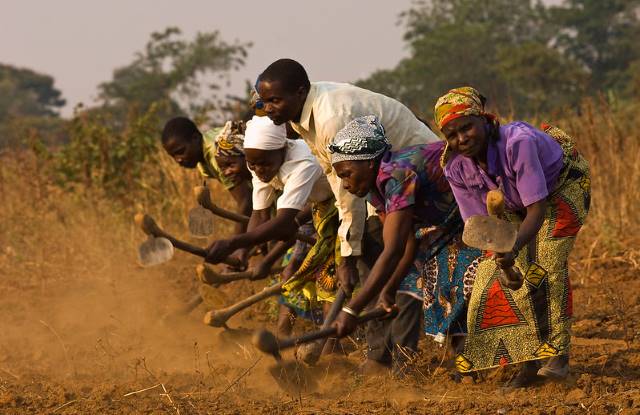
The Farm Input Subsidy Programme (FISP), Malawi's flagship agricultural policy, currently distributes subsidies to individual households, reinforcing the individualistic production model imposed by colonial commercialisation. A reformed subsidy structure should create incentives for communal farming arrangements, modelled on the chigwede and ganyu cooperative labour traditions, by offering preferential access to inputs, extension services, and market linkages for groups of smallholders who register as cooperating units. Evidence from communal farming pilots in Tanzania and Uganda suggests that collective production can increase smallholder yields by 15 to 30 percent while also rebuilding the social bonds that constitute genuine community resilience.
Develop a National Curriculum on Indigenous Solidarity Knowledge
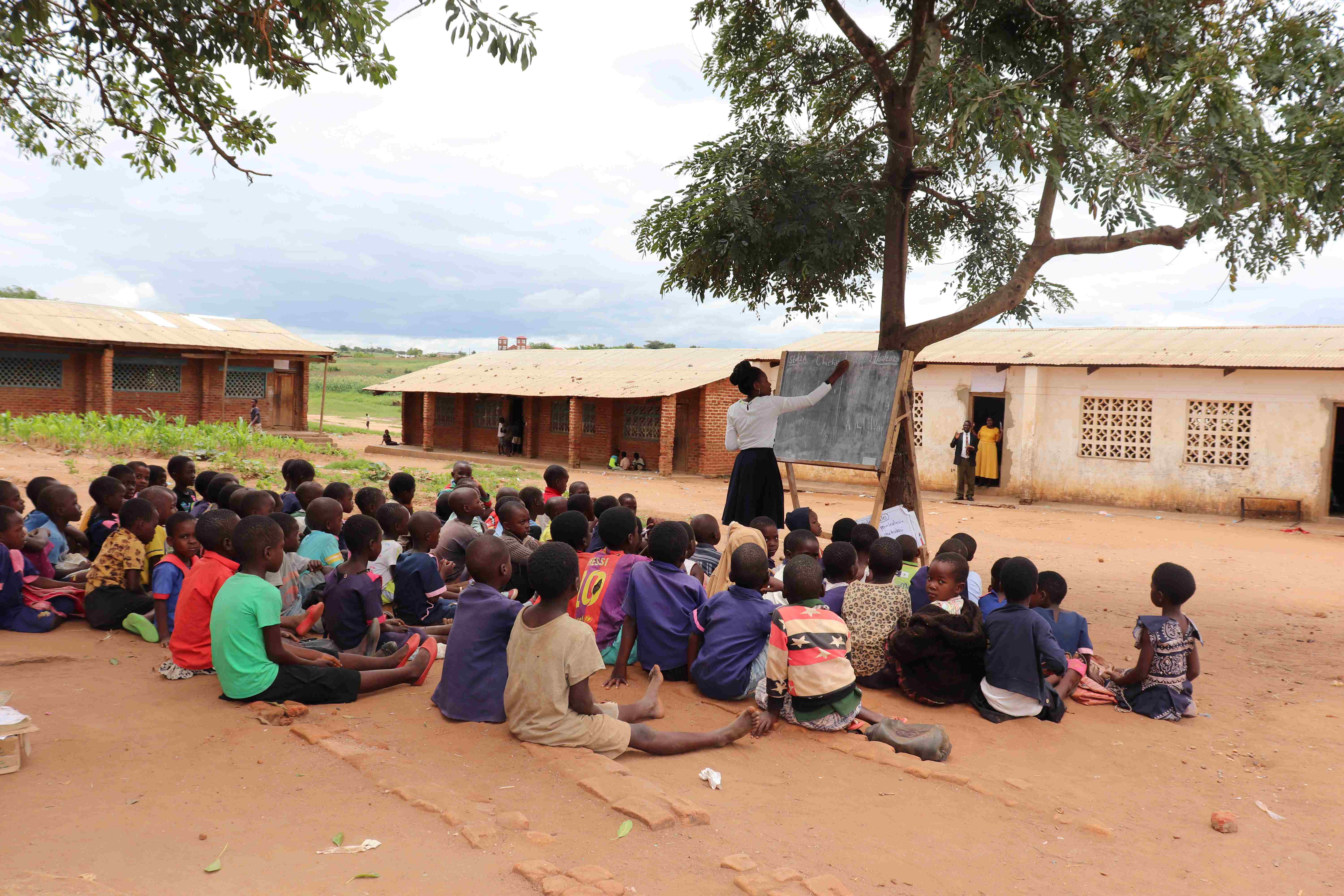
The most sustainable long-term intervention is cultural. Malawi's school curriculum currently marginalises indigenous knowledge systems, including solidarity ethics, in favour of Western liberal individualism imported through colonial education structures. Introducing a nationally mandated unit on Ubuntu ethics, the economy of affection, and indigenous governance across primary and secondary levels would begin the generational work of revaluing collective responsibility. This is not sentimentalism.
Studies of social cohesion in post-conflict societies demonstrate consistently that shared normative frameworks are the foundation of functional communities, and that their erosion is correlated with increased crime, political instability, and reduced public goods provision (Putnam, 1993).
Conclusion
The evidence from Balaka District is not exceptional; it is emblematic. Across Malawi, the systematic destruction of solidarity economies under colonial capitalism, and the failure of postcolonial policy to rebuild them, has left millions of households in a welfare vacuum that neither the market nor the state has adequately filled. The economy of affection was not destroyed because it was inefficient. It was destroyed because it was incompatible with extraction.
The task for contemporary Malawi is neither to romanticise precolonial solidarity nor to accept its further erosion as inevitable collateral damage of modernisation. It is to ask, with intellectual seriousness and political will, how the resilient solidarity practices that communities have preserved against all odds can be recognised, resourced, and scaled into a genuine pillar of national development strategy.
Capitalism has had sixty years to develop Malawi. The evidence suggests that it cannot do so alone. This article does not argue against markets. It argues for a developmental state sophisticated enough to know what markets cannot provide, and brave enough to build it from the materials that Malawian communities have preserved at great cost. The bwalo is still there. The mbumba is still meeting. The question is whether Malawi's policymakers will finally recognise what they are looking at.