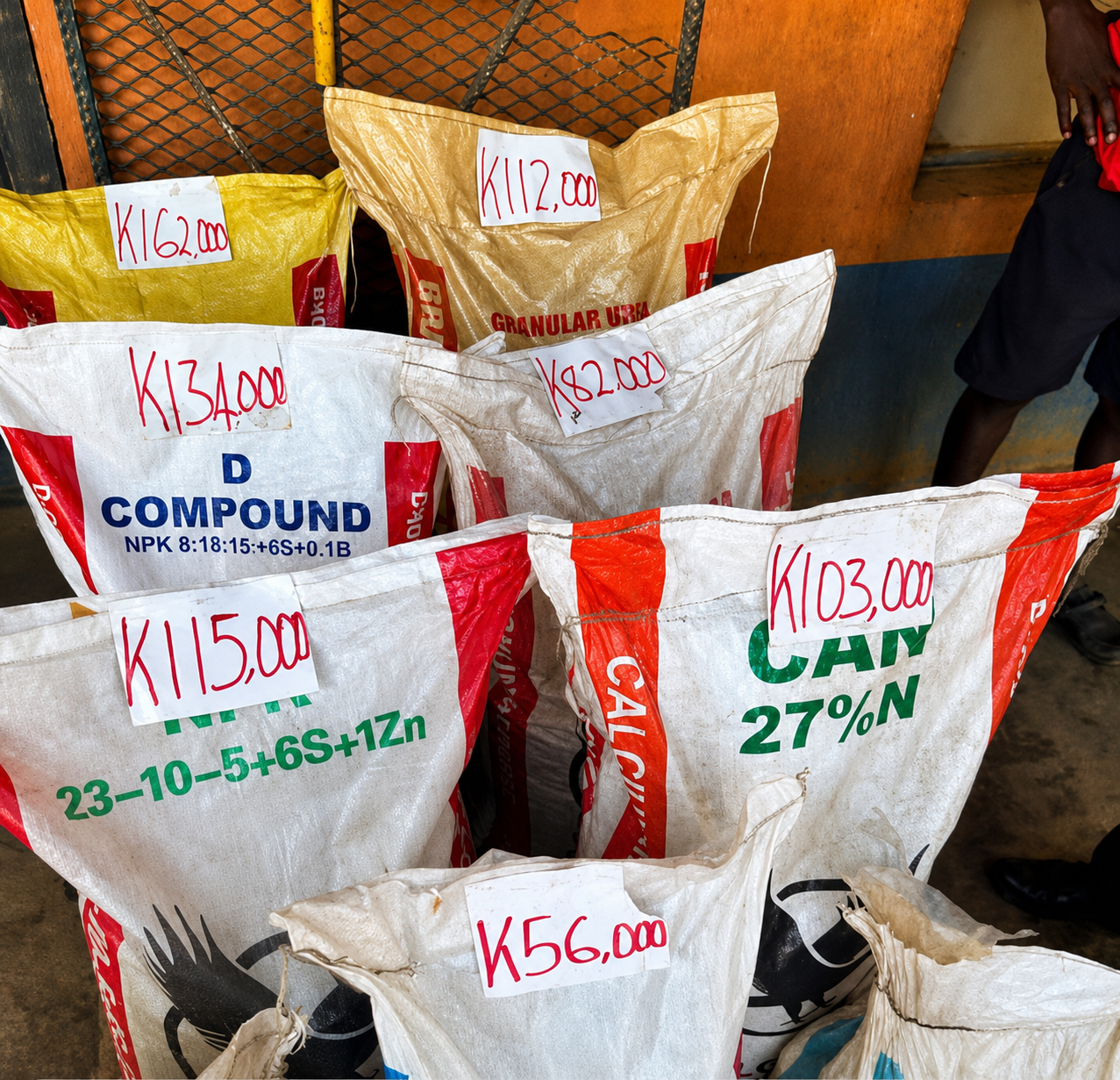
Malawi remains one of the poorest countries in the world. In response to persistent poverty and food insecurity, Malawi has implemented, from way back, several national and international development frameworks. These include the Millennium Development Goals (MDGs), the Malawi Growth and Development Strategies (MGDS I–III), and the Social Cash Transfer Programme (SCTP), all of which emphasized agriculture and rural development as engines of growth (GoM, 2024). More recently, Malawi adopted the Sustainable Development Goals (SDGs) and launched Malawi 2063, a long-term development vision that prioritizes agricultural productivity, wealth creation, and sustainable land management.
From Universal Fertilizer Subsidies to AIP
Central to government’s strategies for dealing with poverty is the recognition that improving farm productivity, particularly maize productivity, is essential for food security and inclusive growth. Government has tried to fix this challenge through input subsidies for decades. What began as universal fertilizer subsidies in the colonial era gave way, after the market reforms of the 1980s and 90s, to a series of targeted programs: the Starter Pack Program (1998), the Targeted Input Program (2000), and eventually the Agricultural Input Subsidy Program launched after the 2004/05 hunger crisis. In 2020, this evolved into the current Affordable Inputs Program (AIP), which now reaches roughly 3.7 million households with subsidized fertilizer and seed (MwAPATA Institute, 2021). Yet, even after all this investment, average maize yields sit below 2 tons per hectare, far short of the 8-13 tons per hectare achievable under good management (FAO, 2023).
What is Wrong?
Much of the research on these subsidy programs asks a narrow set of questions: Whether they are cost-effective (Dorward et al., 2008); whether they raise household food expenditure (Ricker-Gilbert et al., 2009); or whether they crowd out farmers' own commercial fertilizer purchases (Jayne et al., 2018). Others have looked at whether subsidies encourage broader natural resource management practices, generally finding little effect (Koppmair et al., 2017). What almost none of existing research asks is the following uncomfortable questions: Do subsidies cost non-participating farmers something? Do subsidies actually help the soil or just the season's harvest? It is important to answer these two questions in order to address the question of food insecurity in a comprehensive manner. This is because
continuous cultivation without adequate soil replenishment has contributed to declining soil organic matter and nutrient imbalance, undermining the long-term effectiveness of fertilizer-based productivity gains
Snapp et al., 2014; FAO, 2023
The Outcome and the Way Forward
The results are a mixed verdict. AIP does raise maize yields for the households that receive it, consistent with earlier findings. However, in communities with high AIP participation, non-participating households harvest measurably less, suggesting the program's gains for some come partly at others' expense. This kind of spillover typically travels through a few channels: participating households absorb the local extension officer's time and attention, leaving less for everyone else; subsidized farmers compete with their neighbors for the same land, labor, and market access; and where information about new techniques spreads informally between farmers, non-participants who are excluded from the program may also be excluded from the conversation.
On the soil side,
if AIP participation negatively affects whether households adopt organic manure, then, as a country, we are killing the next generation by eroding the soil.
The rise in organic use over the decade is being driven by livestock ownership and location. Moreover, when AIP and manure are used together, the outcome is worse than either input used well on its own, a sign that farmers are not being shown how to combine them. That calls for a great need for intervention in training on how best to use organic manure and inorganic fertilizer obtained from AIP.
Conclusion
Malawi does not need less investment in fertilizer subsidies. It needs subsidies designed with the whole community in view, and with the long-term health of the soil in mind, not just this season's beneficiaries.