125th anniversary · Catholic Church in Malawi
In 2026, the Catholic Church in Malawi marks 125 years since the establishment of its first permanent mission at Nzama in 1901. The anniversary is an important moment in the history of Christianity in Malawi. It provides an opportunity to recognize what the Church has contributed to Malawian society, but also to reflect on the kind of Church that has developed over the past 125 years and the model of the Church that Malawi may need in the future. This article reflects on the history of the Church in Malawi from the standpoint of decolonization.
Missionary Christianity and the Colonial Context
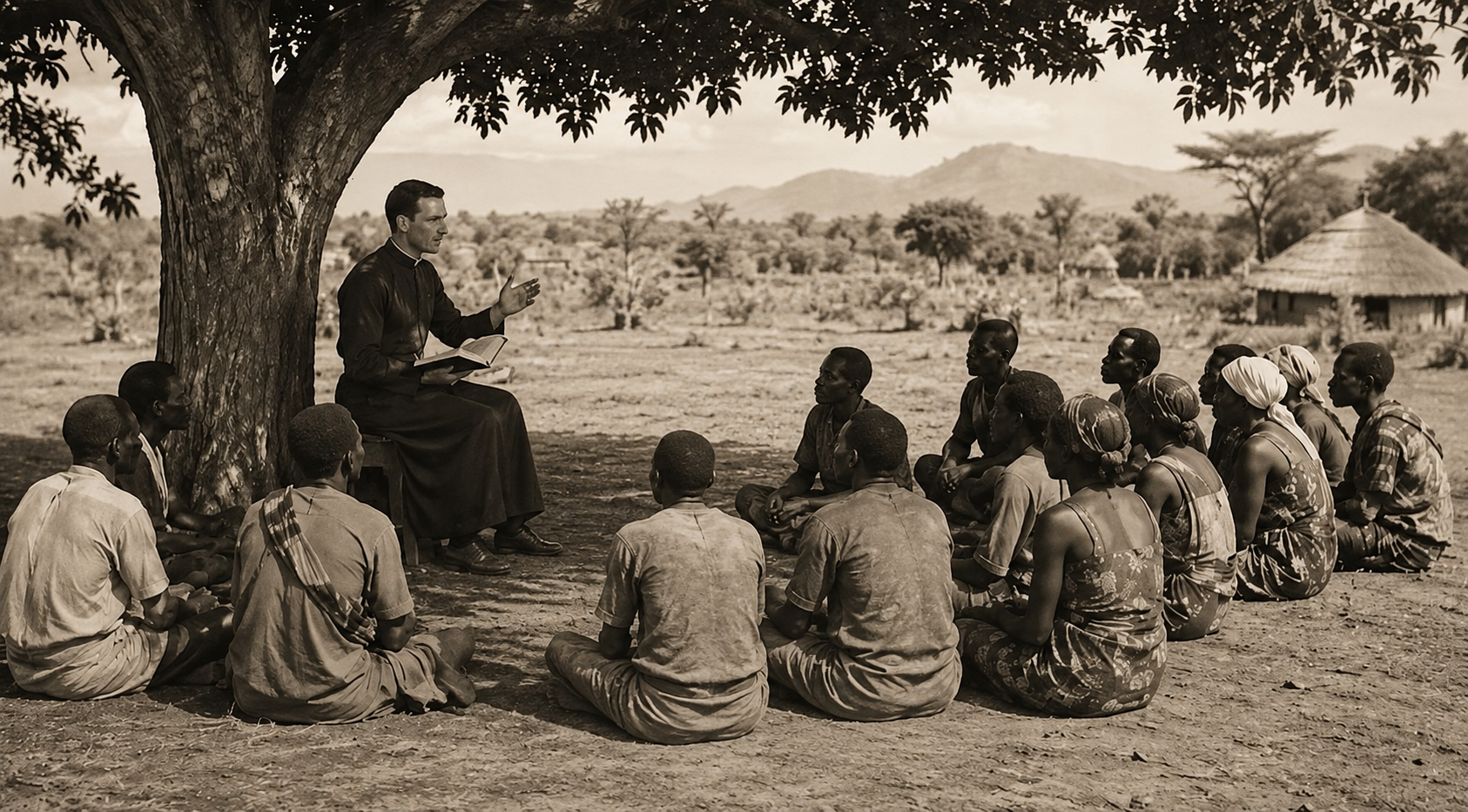
The Catholic Church came to Malawi during the period of European imperial expansion and colonial rule. Missionaries brought the Christian faith, but they also operated within a colonial environment in which European forms of authority, knowledge and culture were often given greater recognition than local systems. This creates an important tension in the history of Catholicism in Malawi. The Church contributed to African education and social advancement, while some aspects of the missionary system also reproduced European ideas about civilisation, morality, knowledge and authority. Missionary Christianity could therefore provide Africans with opportunities while at the same time contributing to the marginalisation of aspects of African culture and knowledge (Comaroff & Comaroff, 1991; Hastings, 1994; Sanneh, 1989).
A Complex Relationship
Missionary Christianity in Africa had a complicated relationship with colonialism. It would be misleading to describe it simply as an instrument of colonial domination. It would be equally misleading to present it as entirely separate from colonial structures.
Mission education illustrates this paradox particularly well. Education gave Africans access to literacy and new opportunities. It also introduced particular ways of understanding history, culture, morality and knowledge. European cultural categories were often treated as standards against which African societies were judged.
African religious traditions were frequently interpreted from the standpoint of missionary Christianity. Some practices were rejected as incompatible with Christianity, while others were not sufficiently understood within their own cultural contexts. African culture could consequently be presented as an obstacle to Christian civilisation rather than as a source of knowledge and identity that deserved serious engagement (Shorter, 1977; Sanneh, 1989).
This does not mean that Africans simply accepted missionary ideas. Africans interpreted Christianity in their own ways, adapted it to their circumstances and, in some cases, resisted missionary control. The development of African Christianity and African Independent Churches (AICs) demonstrates that African Christians were not passive recipients of Christianity (Sundkler, 1961; Ranger, 1986).
This point is important. The history of Christianity in Africa is not simply a story of Europeans acting upon Africans. Africans also acted upon Christianity. They interpreted it, reshaped it and gradually claimed greater responsibility for its institutions. The question today is how far that process has gone.
Africanisation and the Question of Ownership
The emergence of African leadership was a major development in the history of Catholicism in Malawi. Africans gradually assumed positions of authority that had previously been dominated by European missionaries. African bishops, priests, religious sisters and lay leaders became responsible for the direction of Catholic institutions. This was an important achievement. However, the presence of African personnel does not necessarily mean that all aspects of the missionary legacy have disappeared.
The central issue is no longer simply whether Africans occupy leadership positions in the Church. African bishops, priests, religious sisters and lay leaders have assumed responsibilities that were once largely exercised by European missionaries.
The more difficult question is whether the Africanisation of leadership has been accompanied by a deeper transformation of theology, knowledge, culture, institutional authority and pastoral practice.
Africanisation and decolonisation are therefore not the same thing. Africanisation can involve the transfer of leadership from Europeans to Africans. Decolonisation goes further. It asks whether Africans have genuine ownership of the intellectual, theological, cultural and institutional life of the Church. Africanisation primarily concerns the personnel and leadership of the Church. Decolonisation concerns something deeper. It raises questions about knowledge, authority, culture and institutional practice.
Who produces theological knowledge? Whose understanding of Christianity is regarded as authoritative? Which languages are considered appropriate for theological expression? Which cultural practices are welcomed into Catholic worship? How much space is available for African theological scholarship? How are African understandings of family, community, death and human relationships incorporated into Catholic thought? These questions show why Africanisation and decolonisation cannot simply be treated as the same process.
A Church may have African bishops and priests while continuing to depend heavily on theological categories developed elsewhere. It may have African personnel while retaining institutional practices inherited from the missionary period. It may use African music and languages in worship while leaving deeper cultural assumptions largely untouched. Africanisation was therefore an important stage, but it should not be regarded as the completion of the process. The deeper issue is ownership.
Ownership means more than occupying positions of authority. It means having the confidence and institutional space to think, teach, research, worship and organise Church life from within one's own historical and cultural experience.
African Theology and Intellectual Independence
The development of African theology was an important response to the limitations of missionary approaches to Christianity. African theologians questioned assumptions that African religious thought lacked intellectual value. Mbiti (1969) drew attention to African understandings of God, humanity, time, community and existence. Idowu (1973) called for serious engagement with African traditional religion. Shorter (1977) and Nyamiti (1984) contributed to the discussion of how Christianity could take root within African cultural contexts.
The significance of this scholarship is not simply that African scholars wrote about Christianity. More importantly, it demonstrated that African experience could provide a legitimate basis for theological reflection.
This remains relevant to Malawi. Questions arising from Malawian society should become part of theological reflection. The Church needs theological scholarship that engages seriously with Malawian experiences of family, marriage, community, poverty, migration, death, youth, gender and social responsibility.
Theological education therefore deserves particular attention. Seminaries and Catholic universities should not only transmit established theological knowledge. They should also provide space for research into the religious and social realities of Malawi.
A Church that depends entirely on theology produced elsewhere risks remaining intellectually dependent even when its leadership is African.
The task is not to reject theology from Europe or elsewhere. The universal Church has benefited from theological contributions from many parts of the world. The challenge is to ensure that Malawi is not only a consumer of this knowledge but also a contributor to it.
Inculturation and the Catholic Church in Malawi
The question of culture is at the centre of the decolonisation debate. Inculturation is sometimes understood simply in terms of using local languages, music, dance or artistic forms in Catholic worship. These are important, but inculturation needs to go further. Pope John Paul II's post-synodal Exhortation Ecclesia in Africa presents inculturation as a process affecting theology, liturgy, customs and Church structures and requiring serious engagement with African cultures (nn. 59–64, 78). The Second Vatican Council also provided an important theological basis for greater engagement between Christianity and culture. Sacrosanctum Concilium allowed appropriate adaptation of the liturgy to different cultures while maintaining the unity of Catholic worship, while Gaudium et Spes recognised the importance of culture in human development.
For the Church in Malawi, this means that inculturation should involve more than adding African cultural elements to existing forms of Catholic practice. African understandings of family, community, marriage, death, solidarity and mutual responsibility deserve serious theological consideration. Many African societies place strong emphasis on communal responsibility and mutual assistance. These values can provide important resources for Catholic social teaching and pastoral life.
At the same time, not every cultural practice should be accepted simply because it is African. Some practices may conflict with human dignity, equality and inclusion. Inculturation therefore requires discernment. The Church should neither reject African culture nor accept every aspect of it uncritically. It should engage African culture seriously, recognising its strengths while also addressing practices that require transformation.
Decolonising the Life of the Church
If decolonisation is to have real meaning, it must also affect the internal life of the Church. The Church has often spoken strongly about social justice in wider society. The same principles should inform its own institutional life. Transparency, accountability and participation are therefore relevant to the question of decolonisation.
The role of lay people deserves particular attention. Catholicism in Malawi has many educated and experienced lay members who can contribute to the governance and pastoral mission of the Church. Greater participation would not weaken the Church. It could strengthen its connection with the society in which it operates.
Women and young people also need meaningful opportunities to participate in the life of the Church. Young people in particular live in circumstances very different from those of earlier generations. Technology, migration, changing employment patterns and social media have transformed the way young Malawians communicate and understand the world.
The Church cannot address these changes only through methods developed for an earlier period. Catechesis, pastoral communication and evangelisation need to respond to contemporary realities. This is not a call to abandon tradition. It is a call to examine whether inherited structures continue to serve their purpose.
The Church and the Next 125 Years
The first 125 years of Catholicism in Malawi were largely concerned with establishing and expanding the Church. Missionaries established parishes, schools, hospitals, seminaries and other institutions. African Catholics gradually assumed responsibility for these institutions, and the Church became an important part of Malawian society.
The next 125 years will require a different approach to evangelisation. The Church must ask what should be retained from its history, what should be changed and what should be left behind. One area requiring attention is theological education. Malawi needs Catholic scholars capable of engaging international theological debates while also producing scholarship grounded in Malawian realities. Catholic universities and seminaries have an important role to play in this regard.
The Church also needs to examine its pastoral structures. Some structures developed under missionary conditions may no longer be appropriate to contemporary Malawi. Institutional renewal should therefore become a normal part of Church life.
Youth engagement is another important concern. Young Malawians are living in a rapidly changing society. The Church must find credible ways of engaging them through education, digital communication, catechesis and participation in Church life. The same applies to women and other groups whose voices may not always receive sufficient attention in institutional decision-making.
The Church's social mission must also remain central. Education, health care and social welfare remain important areas through which Catholic institutions serve society. But the Church's social mission should continue to respond to changing circumstances rather than simply reproducing models inherited from the missionary period.