Seneca observed that if a man does not know to which port he sails, no wind is favourable (Letters to Lucilius, 71). Malawi’s agricultural policy this season suggests the inverse embarrassment: the port is known, the storm is charted, and yet the ship is being rigged for fair weather. Since June, the Ministry of Natural Resources has warned that a strong to very strong El Niño is developing, with a probability above 80 percent and, for southern districts, a December risk of below-normal rainfall exceeding 80 percent in some areas (Ministry of Natural Resources, 2026). The Chief Secretary has since announced a K488.5 billion preparedness plan for the coming season (Nation Online, 2026). Yet the same government is issuing subsidised fertiliser in prone districts, an input whose returns depend on precisely the resource its own forecasters say will be scarce. This article argues that such a policy is both paradoxical and hypocritical: paradoxical because it presumes the very rainfall the state predicts will fail, and hypocritical because a government that preaches drought while practising abundance is not preparing its people; it is reassuring them falsely. It further asks the uncomfortable question that every subsidy must eventually face: who actually benefits?
The Paradox of Fertilising a Drought
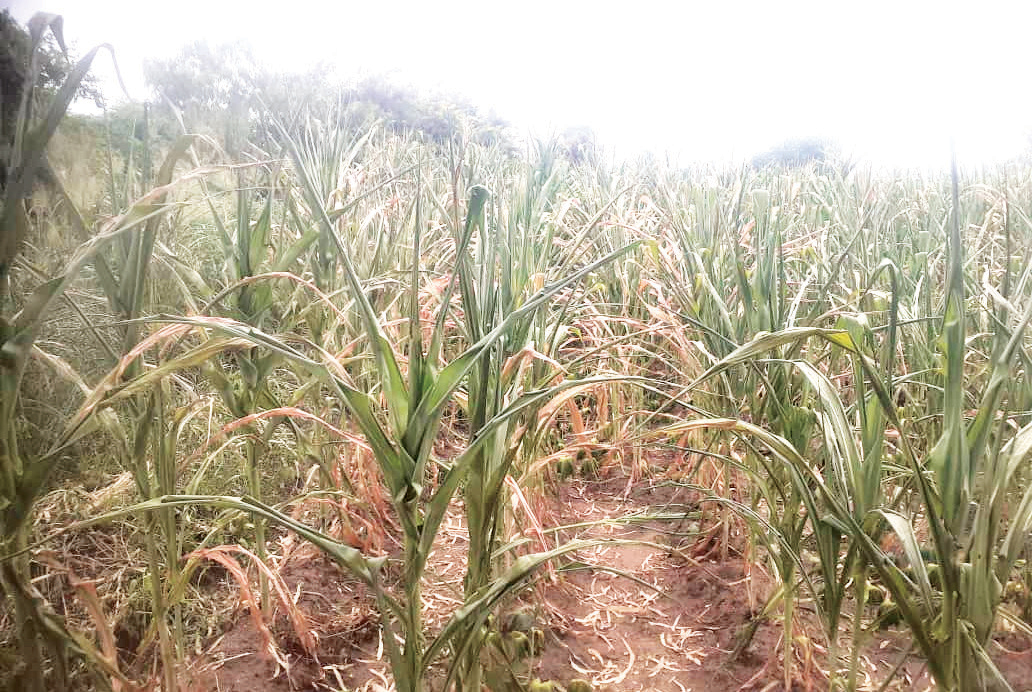
Fertiliser is a complement to water, not a substitute for it. Nutrients reach the plant only in soil moisture; where rain fails during critical growth stages, the applied nutrients cannot be used, and the farmer’s investment of cash, labour and hope is stranded in the soil. The meteorological evidence points in one direction. The June preparedness brief gives up to a 62 percent chance of below-normal rainfall, with fewer rainy days, during January to March 2027 (Ministry of Natural Resources, 2026). The last very strong El Niño, in 2015/16, cut Malawi’s maize harvest by 29 percent relative to the preceding ten-year average, and yields have fallen in eight of the last twelve El Niño years (Duchoslav et al., 2026).
It is therefore striking that farmers in Nsanje and Chikwawa who depend on rainfall have already begun buying subsidised fertiliser. These Lower Shire districts have long been among the most exposed to failed harvests in El Niño years (Africa Sustainability Matters, 2025). To hand fertiliser to such farmers is, in effect, to tell them that the rains will come and that they should plant accordingly. It is the policy equivalent of the man in the Gospel who “built his house on sand” (Matthew 7:26): the structure looks sound in fair weather and collapses when the storm arrives.
The fiscal contradiction deepens the paradox. The 2026/27 budget cut the subsidy allocation by almost 54 percent, from K241 billion to K111 billion (Nation Online, 2026a), and fertiliser stocks stand at less than a third of national requirements. Meanwhile, the El Niño plan has mobilised only K163.7 billion of the K488.5 billion it requires, a gap of about K325 billion. Delivery has also been chronically late: barely half of targeted farmers had accessed inputs by January 2026. A subsidy that arrives after the planting window, into a drought, protects no one.
Cui Bono? The Question of Who Benefits
The stated beneficiary is the smallholder, typically cultivating about 0.4 hectares (FAO). The documented record, however, shows that a considerable share of the subsidy’s value is intercepted before it reaches the field. No wonder it cannot stop amidst EI Nino. An independent study of the 2007–2009 programme found illegal markets for coupons and fertiliser to be as serious as under its predecessors (Forum for Development Studies, 2012). Under the later Affordable Inputs Programme, vendors raided villages to buy national identity cards for between K13,000 and K20,000 each, using them to draw bags at the subsidised price (Nation Online, 2022), and researchers recorded selling clerks diverting fertiliser to vendors and demanding extra payments (Kenamu et al., 2021). In September 2025, reporting on the Minister’s new access rules acknowledged that subsidised fertiliser had too often ended up with traders, senior officials and political loyalists, along with “briefcase farmers” who registered repeatedly in order to resell.
The 2026/27 design offers little reassurance. The government has reverted to paper coupons distributed through farmer groups, a move that campaigners fear reopens the door to abuse, while the main state-linked supplier has reportedly requested 75 percent of the K111 billion in contracts. Even the Minister has felt compelled to warn sales clerks in the 600 selling outlets against extorting farmers (Nation Online, 2024).
The evidence does not permit a precise apportionment of benefits, and it would be unjust to accuse every official. But the pattern is clear: rents accrue most reliably to those positioned between the bag and the farmer, namely brokers, clerks, suppliers and the well connected. The poor receive what is left, usually late. Moreover, when farmers sell their allocations, as many do, they are not being irresponsible; they are revealing their preference. Some beneficiaries lack the land or labour to use fertiliser, and the Mwapata Institute has urged that such households may need other interventions, not fertiliser (Zodiak, 2023). Why not giving them their preference? Some are close to Dambo Land, suitable for livestock rearing. With a market bag now costing about K205,000, every subsidised bag is a tradeable asset, and a hungry household will rationally convert it into cash for food. A policy that is routinely monetised by its intended beneficiaries is telling us that the beneficiaries need money.
The Strongest Objection
In fairness, the subsidy has a respectable history. In 2005/06, its first season, Malawi produced 2.7 million metric tons of maize, a half-million-ton surplus over estimated need (Mpaka, 2026). Northern districts face low El Niño risk, and fertiliser retains value there and on irrigated plots elsewhere. The forecast is also probabilistic: a poor harvest is likely, not certain (Duchoslav et al., 2026). Thomas Sowell’s maxim that there are no solutions, only trade-offs, applies.
But the objection supports differentiation, not uniformity. In the Lower Shire the expected return on fertiliser is at its lowest while the downside, in wasted cash, debt and a harvest already at risk, is at its highest. A government that accepts the trade-off should accept it where the returns are greatest, and spend elsewhere what it would otherwise sink into dry ground.