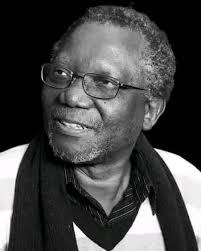
On 4th November, 2026, the media announced the demise of Jack Mapanje, arguably Malawi’s greatest poet. Born in Kadango Village, Mangochi District, John Alfred Clement “Jack” Mapanje obtained his BA in education and later a PhD in Linguistics from the University of London. Despite holding a PhD in Linguistics, Mapanje’s fame rested on poetry because of his affinity for oral literature and storytelling techniques rooted in foregrounding. In And Crocodiles Are Hungry at Night (2011), Mapanje explains the challenges he faced as an English lecturer at the University of Malawi, where Dr. Kamuzu Banda’s “snakes and crocodiles” were a constant threat. Dr. Hastings Kamuzu Banda’s ‘omnipotent’ regime relied on the Youth Militia, the Malawi Young Pioneers, and the Special Branch of Police, among others, as his eyes and ears. The Malawi Censorship Board made academic writing and creativity difficult, and thus, “voices were muffled.” Mapanje’s Of Chameleons and Gods (1981), poetry that exposes Malawi’s suffering under Banda’s despotism, may have contributed to his arrest.
Arrest, Imprisonment and Testimony
He was arrested on 25 September 1987, incarcerated at Mikuyu Prison without trial, and was released in 1991. Mapanje’s poetry both advised and criticised Dr. Hastings Kamuzu Banda, earning him the title of an imbongi, a word derived from Nguni languages like isiZulu, for a traditional oral praise poet. Reading through Mapanje’s writings in Summer Fires: New Poetry of Africa (1983), Oral Poetry from Africa: An Anthology (1983), The Chattering Wagtails of Mikuyu Prison (1993), Skipping Without Ropes (1998), The African Writers’ Handbook (1999), Gathering Seaweed: African Prison Writing (2002), The Last of the Sweet Bananas (2004), and Beasts of Nalunga (2007), one gets a sense of the follies of despotism. Mapanje’s And Crocodiles Are Hungry at Night (2011) narrates his life experiences and incarceration at Mikuyu Maximum Prison, including how many Malawians suffered under Banda’s tyranny. Mapanje laments Banda’s regime “for permanently shattering [his] academic career” (p. 432).
A Poetry of Witness
Jack Mapanje’s poetry is central to Malawian literature because it records Malawi’s history under dictatorship and is loaded with deep meanings clothed in animal imagery, African philosophy, and mythopoeia. Mapanje “peeped into the dictator’s drawer” and exposed his tyranny when many academics embraced silence as a self-preservation strategy. His incarceration helped expose Kamuzu Banda’s cruelty to the international community. He wished his country well. As we celebrate his life, we will remember him as Malawi’s poetic, academic, and linguistic genius. May his soul rest in eternal peace.
Who Will Bear the Torch?
Mapanje has joined a long list of deceased Malawian writers: Legson Kayira, who passed on in 2012; Desmond Dundwa Phiri, fondly known as D.D. Phiri, who departed in 2019; James David Rubadiri, who returned to the Lord in 2018; Steve Bernard Chimombo, who breathed his last in 2015; and a more distant voice – William Chafulumira – who left this world in 1981. As we watch this procession of Malawi’s distinguished writers, the following question is inevitable: Who will bear the torch of Malawi’s literary tradition? Will Malawi’s glowing literary culture be buried in Mircea Eliade’s nostalgic in illo tempore (‘in those days’) of great men and women, or will the soil raise up new ‘prophets’ to declaim a double-edged word that reveals us to ourselves? Whatever the case may be, one thing is clear: writers will not emerge without a robust structural support. Even more importantly, Malawi needs to create demand for literary works by strengthening its reading culture.