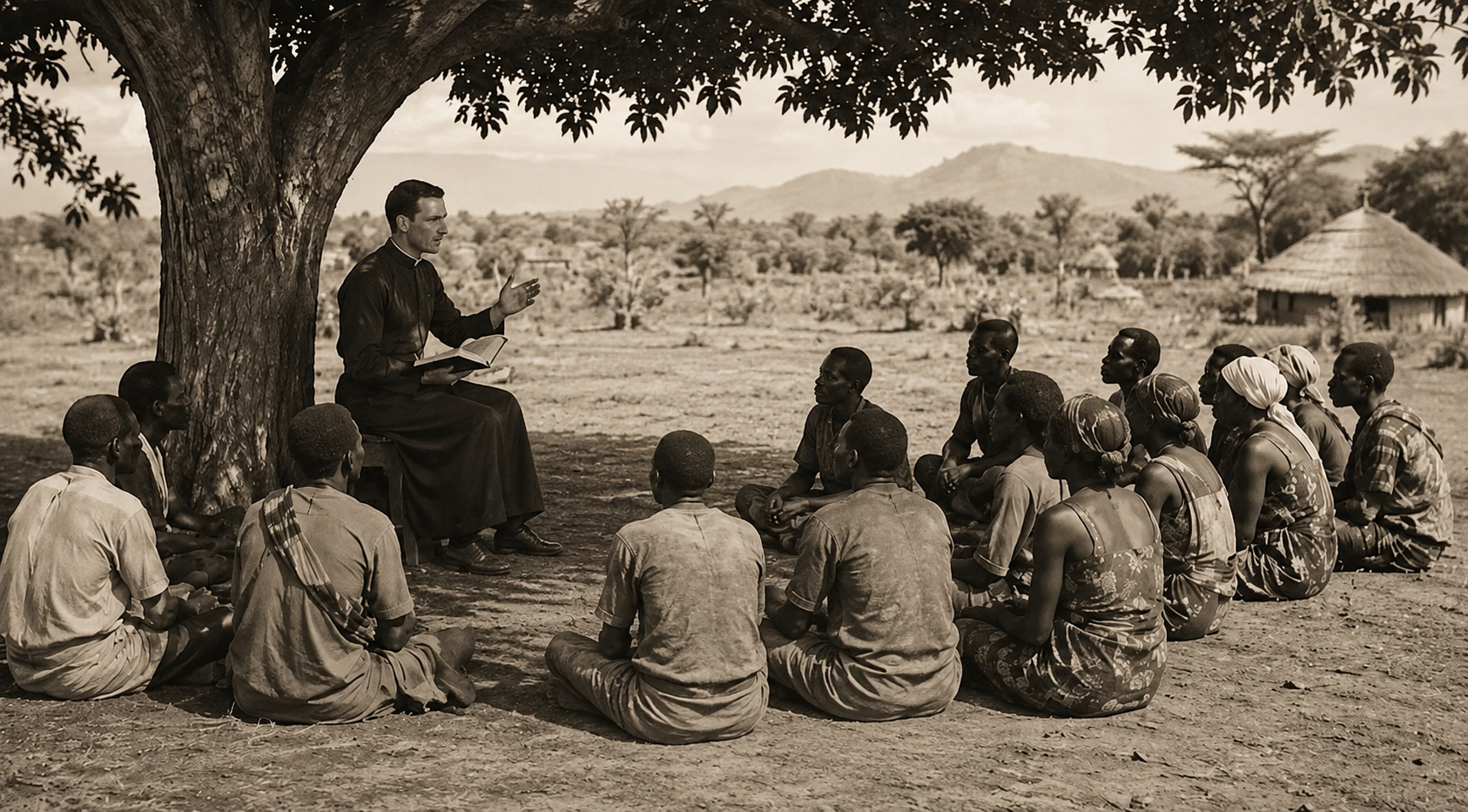
Democracy is widely associated with economic development. In the 1992 pastoral letter titled Living Our Faith, Malawi’s Catholic Bishops attributed the country’s economic underdevelopment and unequal distribution of resources to lack of participatory politics. The Bishops thus proposed a new political system that would strengthen popular participation in governance processes in the collective quest for integral development. The Bishops’ call, interpreted by political activists as a call for democracy, is widely linked with Malawi’s transition from one-party system to a multi-party system of government in 1993. Advocates of democracy predicted that Malawi would experience an economic boom if it transitioned to democracy. However, more than three decades down the line, the predicted economic results continue to elude the country. This year (2026) marks 33 years since Malawi adopted multi-party democracy. The World Bank estimates that in 1992, the population of Malawians living below the poverty line was between 60% and 65%. Today, the proportion of Malawians living below the international poverty line has soared to 75%.
This article critiques the narrative that tends to present democracy as a predictor of economic prosperity and argues, without jettisoning the value of democracy, that the missing ingredient in Malawi’s struggle for economic prosperity is moral leadership. The role of democracy, this article sustains, is propaedeutic rather than executive in nature, preparing the platform for collective decision-making and citizen engagement but not directly influencing the execution of tasks upon which economic development is predicated. The effective execution of those tasks depends on the integrity of office bearers.
Tracing the Origins of Malawi’s Multiparty Democracy
Malawi’s multiparty democracy was adapted from the Modern Western system of democracy. It is hinged on what Schumpeter called a ‘classical theory of democracy’ based on the Enlightenment movement. It postulates that ‘democratic processes’ have the capacity to realize the common good because ‘political unity’ under the umbrella of reason is possible (Schumpeter, 1942). The ‘political unity’ in question is claimed to be founded on human nature, which is reason. In relation to democracy and State-politics, enlightenment philosophers assume that truth is one and unchangeable. Once humans discover the truth, using abstract thought, then ‘common will’ is going to be contained in a social contract called ‘constitution’. The underlying belief is that political leadership only acts as an agent to do the will of the people contained in a constitution.
Against the classical theory of democracy, Noam Chomsky theorized on how the ‘common will’ comes about in a democracy. He opined that the common will is manufactured through the manipulation of diverse opinions. For example, the courtiers of the State, ‘spin doctors,’ corporate power and media, are responsible for the manufacturing of the ‘common will’ as they “shape the public debate, marginalize the opposition and trivialize dissent in accord with the interests of those with power.” The common will, therefore, is hegemonic, where an individual’s or a social group’s narrative bulldozes others and silences voices of the marginalized. In that regard, democracy is itself a subtle totalitarian system. It imposes the will of an individual or a group on others. Therefore, any attempt to link multiparty democracy to a participative government is an illusion. Similarly, linking democracy to economic development is a fantasy since democracy serves the will of the elite.
The elite as a social category are always in constant struggle for power. It is here that democracy becomes handy. In The Will to Power, the German philosopher Friedrich Nietzsche argued that, consciously or unconsciously, human beings are consumed by the desire to exercise authority over others. Whenever a society has no mechanism to control ‘how power to decide in the society is assumed,’ history has shown that the outcome has always been anarchy. It is in relation to the situation of ‘anarchy over power’ that Schumpeter believed modern democracy is a better method of acquiring the ‘power to decide in a society’ without bloodshed. Democracy becomes an implicit method for deciding the matter of supremacy amongst the few ‘power hungry elite’ (Schumpeter, 1950). In Malawi, the multiparty democracy has managed to mediate power alternation amongst the elite. However, the political system has failed to deliver the expected results, namely socio-economic development. What, then, is the way forward?
From the Rule of Law to Ethical Leadership
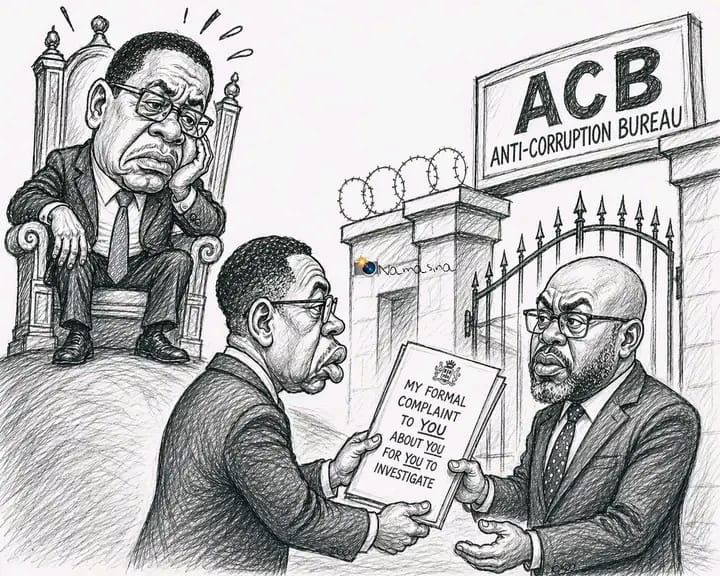
One of the components of democracy is the rule of law. The law is presented as the panacea for all social ills including poverty and/or corruption. However, what is normally lost sight of is the fact that the law does not interpret itself. In their 1992 analysis, the Catholic Bishops observed that the country’s political system was fraught with any number of injustices. They wrote, “bribery and nepotism are growing in political, economic and social life.” They were well aware that Malawi was equipped with a judiciary system to address injustices. However, the Bishops did not go to court to seek redress, for they were aware that the justice system was itself corrupt and never impartial in its dispensation of justice. The prelates challenged the judiciary’s partiality by stating that impartial judgement would be “possible if the administration of justice is independent of external influence, political or other.” In other words, the legal system is not immune to corruption. The bishops criticized the one-party political system not because it was not lawful. Rather, because it failed to promote the common good. They demonstrated a fundamental lesson:
A law or system that is devoid of ethics is not worth subscribing to.
Stated otherwise, there is a distinction between mere adherence to the law and ethical behaviour. One can follow the law without necessarily being ethical. Leaders who are ethical always act with integrity and, as B.M. Bass once averred, “are ready to sacrifice anything for the sake of virtue.” Simon Sinek makes a similar point in his book titled Leaders Eat Last, a book deeply inspired by Nelson Mandela’s ethical leadership. Rod Chesnut, former Chief Ethics Officer of Airbnb and the author of Intentional Integrity, once said: “Integrity is contagious. If people see leaders acting with integrity, then they’re going to step up and want to act with integrity as well. But, of course, the reverse is true. Leaders who cut corners or enable bad behavior encourage their peers and the people they lead, to do the same” (2022). When the leadership demonstrates integrity, citizens normally follow suit.
Conclusion
In 1993, the majority of Malawians voted in favour of a transition from one-party to a multi-party democracy. The psychological contract underlying this choice was that multiparty democracy would answer the cry of the poor and midwife their transition to a more dignified life characterized by a more equitable distribution of resources. The experience over the years, however, has given the lie to this expectation as poverty and corruption continue to deepen to epidemic proportions. Clearly, the right to elect leaders through democratic processes is not sufficient to address Malawi’s recalcitrant development bottlenecks.
What the country needs are morally sound leaders capable of exercising stewardship over Malawi’s limited resources and promoting the common good.