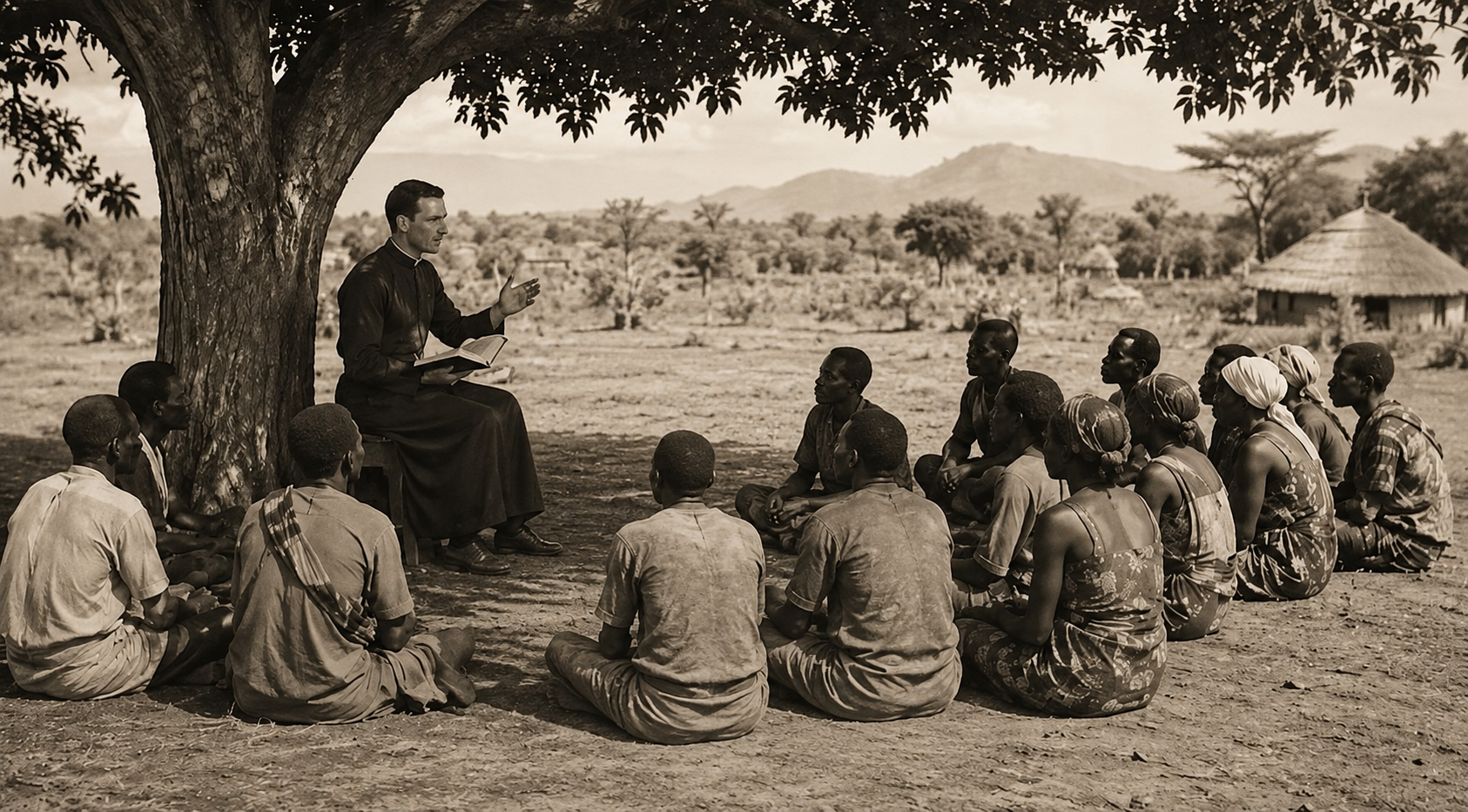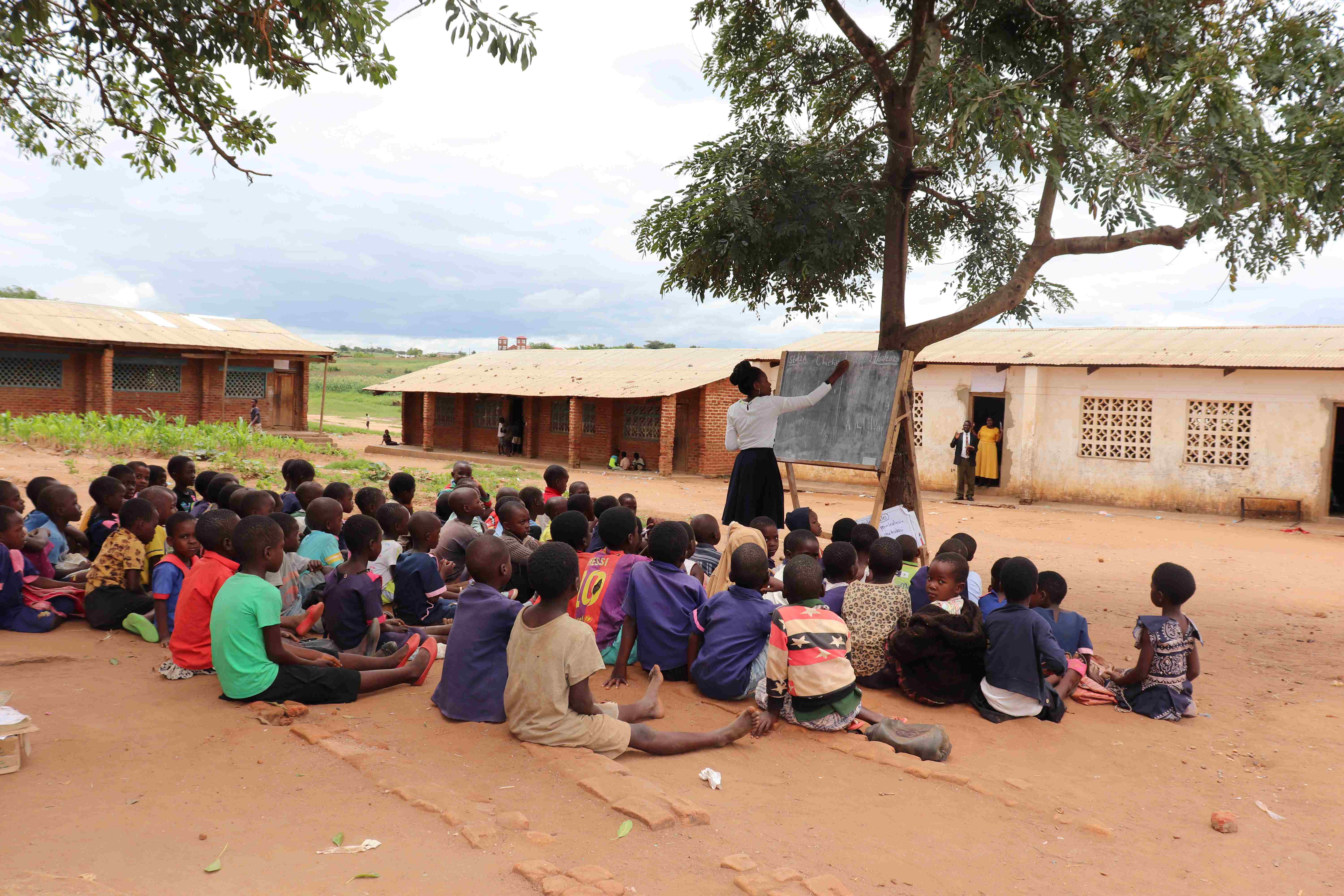
Few professions are praised as often, and rewarded as rarely, as teaching. Every graduation speech thanks the teacher; every payroll queue reminds the teacher to wait. Almost every doctor, lawyer, pilot and president passed through a classroom, yet the people who stand at the front of that classroom are frequently told that their work is “a calling” and that the reward will come in heaven, or in the success of their students. The 2024 UNESCO Global Report on Teachers warns that the world needs 44 million additional teachers by 2030, about 15 million of them in sub-Saharan Africa, and that primary teacher attrition nearly doubled, from 4.62% in 2015 to 9.06% in 2022 (UNESCO, 2024; United Nations, 2024). The fact that people are abandoning a profession in droves is a message that cannot be ignored.
This article looks at how the phrase “teaching is a calling” is used, at the problem of teachers being summoned to workshops before allowances are ready, at why teachers struggle to act together, at the free services teachers give that other professionals charge for, at the fees lecturers pay to share knowledge, and at why teaching remains underrated. A neutral reading is attempted throughout: organisations and institutions also face real constraints, and these are acknowledged.
Teaching: A Calling and a Profession
The idea of teaching as a vocation is old and honourable. Intrinsic motivation, the desire to help children learn for its own sake, is one of the strongest drivers of good teaching (Ryan & Deci, 2000). Nothing in this paper wishes it away. The difficulty arises when the phrase is turned from a description into an instruction: you are called, therefore you should not ask. Ettarh (2018), writing about librarians, calls this “vocational awe” – the belief that certain work is so sacred that those who do it should accept poor conditions without complaint. Stolzoff (2023) makes a similar point about workers in many fields: when work is presented as a passion, employers find it easier to ask for more and pay for less.
Official international standards say the opposite. The ILO-UNESCO Recommendation concerning the Status of Teachers (1966), which Malawi and most countries have endorsed, states that “teaching should be regarded as a profession: it is a form of public service which requires of teachers expert knowledge and specialised skills, acquired and maintained through rigorous and continuing study” (paragraph 6). It adds that teachers’ salaries should “reflect the importance to society of the teaching function” (paragraph 115a). The language is the language of profession, not of charity. A calling explains why a person begins to teach. It does not explain why the person should be unpaid, underpaid or paid late. Goodwill, however sincere, does not buy maize or pay school fees. Dedication deserves at least a token of recognition, and a token is not a favour but a form of respect.
A Quiet Form of Oppression
Consider a situation that many teachers will recognise. An organisation invites teachers to a three-day workshop far from their duty stations. On arrival, they are told that the allowances are not ready and will be deposited eight days later. Some participants spent the only money they had set aside for relish. Others borrowed their transport fare. They cannot leave, because leaving would waste the journey and offend the organisers; they cannot stay comfortably, because they have nothing to spend.
A fair-minded reader will note that delays often have causes outside the organisers’ control: donor disbursements arrive late, approvals stall, bank processes slow down. Even so, the question remains a practical one. If the money is not ready, why call the participants now? A workshop can be rescheduled at a far lower cost than a teacher’s trust can be rebuilt. Inviting people to spend their own money, on the promise of repayment, quietly transfers the organisation’s financing problem to its least powerful participants. When this happens repeatedly and the affected group never objects, it becomes a pattern that deserves a stronger word than inconvenience. It is a form of oppression, and part of the responsibility for it lies with those who have learned to accept it without saying a word.
Why Teachers Do Not Unite
Teachers are among the most numerous professionals in any country, and yet they are often the least organised in practice.
Several attitudes explain this. Some say, “I cannot work with my own money,” and withdraw quietly or go to the workshop anyway. Others reason, ‘bola ndatengedwa, atisungira-’ meaning “they will pay me eventually; they are keeping it for us,” and choose patience over protest. Both positions are understandable for an individual with a family to feed. Together, however, they make a collective position impossible. Olson (1965) explained long ago why large groups fail to act in their common interest: each member hopes someone else will bear the responsibility of speaking up, and the group stays silent.
Other professions show that it need not be so. Doctors’ associations, bar associations and engineering bodies set minimum fees, defend their members publicly and discipline those who undercut the group.
Teachers do have unions and associations, and these have secured real gains in many countries, but they are weakened when members prefer private compromise to common action.
Unity does not require hostility. It requires agreed standards, such as no allowance-dependent workshop without confirmed funds, and a willingness to hold uphold them. It must begin as a change in how teachers see themselves: as members of a profession with shared interests, not as individuals waiting to be paid.
Free Signatures, Free Consultations, Free Reference Letters
A lawyer or commissioner for oaths normally charges a fee before placing a signature or stamp on a document, however short the document may be. The fee does not pay for the ink; it pays for the knowledge, the responsibility and the professional risk behind the signature. A teacher or lecturer, by contrast, is routinely asked for a reference or recommendation letter of two pages. Writing it requires recalling a student’s record, judging character and ability honestly, and staking one’s own reputation on the outcome. It takes time and carries professional responsibility, and it is usually done at no cost.
The same reasoning applies to consultation. In boarding schools, every term has a visiting or consultation day when parents and guardians collect reports and meet form teachers to ask about their children’s academic progress and behaviour. In substance, this is professional advice about a child’s development. Lawyers, doctors and financial advisers charge for consultations; teachers do not, and few people see anything unusual in that. Schools might reasonably include such services in a transparent fee structure, or at least recognise them in teachers’ workload and allowances. Nothing here suggests that a child should ever be denied a reference or a hearing because a family cannot pay. The point is that the work is real, it has value, and it should be acknowledged rather than assumed to be free.
Who Is Supposed to Pay Whom?
The imbalance is sharper in higher education. A lecturer may spend sleepless nights researching and writing a paper that could benefit the public. To publish it, many journals ask the author to pay: article processing charges at open-access journals range from a few hundred to several thousand US dollars (Solomon & Björk, 2012). To present the same work at a conference, the author often pays registration, travel and accommodation. Scholars in lower-income countries feel this most keenly, because the charges are set in strong currencies against local salaries.
It is fair to note why these fees exist. Peer review, editing, hosting and organising a conference all cost money, and many journals offer waivers or discounts for authors from low-income countries. Still, the broader pattern invites a question: when the knowledge producer pays to publish and pays again to present, who is supposed to pay whom? Consider other fields. Musicians do not pay to perform on a stage; they are paid. Consultants are paid for presentations. Even some preachers, whose own scripture says that “the labourer is worthy of his hire” (Luke 10:7), charge entry to halls, which suggests that other callings have long been comfortable pricing their work. Universities, research councils and professional bodies should therefore fund publication and conference costs as an ordinary part of research, and lecturers should learn to ask for this support as a matter of course instead of quietly paying from their own salaries.
Why Teaching Is Underrated
Teaching is underrated for several connected reasons. First, its results are slow and shared: a good teacher’s influence appears years later in the careers of former pupils, and no one sends an invoice for it. Second, because nearly everyone has been to school, many people assume they understand teaching and therefore undervalue its expertise. Third, governments and organisations have learned that teachers will often absorb delays and costs without protest, so the system adjusts to that expectation. Fourth, teachers themselves sometimes help to reinforce the picture by treating payment as slightly shameful. Nelson Mandela (2003) called education “the most powerful weapon which you can use to change the world”. A weapon of that kind is not maintained by applause alone.
The change must therefore be two-sided. Organisations should schedule allowance-based activities only when funds are confirmed, pay promptly, and treat teachers’ time as valuable. Ministries and institutions should recognise references, consultations and mentoring in workload and pay structures, and should support lecturers’ publication and conference costs. Teachers, for their part, should begin by changing their own language and habits: agree on collective standards through their associations, decline arrangements that depend on borrowed money, and describe their work as a profession with a price, not as a favour with a blessing.
Conclusion
The claim that teaching is a calling is not false, but it is incomplete, and when it is used to silence legitimate questions it becomes harmful.
Teachers and lecturers deserve the same respect that other professionals receive: timely allowances, recognition for the services they provide, and support for the knowledge they create.
Waiting for others to grant that respect has not worked well. The first step is a change of mindset among teachers themselves: calling and compensation can sit together, dedication is worth a token, and a profession that values its own work will find others following. In the words of the ILO-UNESCO Recommendation, teaching is a profession. It is time to behave, and to be treated, accordingly.