To please our former colonisers, we often tell ourselves lies. As we sink below the poverty line, lies against ourselves gather momentum, just as affluence brings its own capacity for greater counter-hegemonic discourse. As cultural resistance and counter-discourse, African literature “writes back” to the centre or empire, correcting historical distortions and deconstructing Eurocentric narratives. Nyasaland soldiers in the King’s African Rifles (KAR) were forced to fight for the British in World War I and II. They were paid far less than the white soldiers, had no recognised soldiers’ ranks or pension schemes, and their names were omitted from Commonwealth memorials, not even commemorated by the Commonwealth War Graves Commission (CWGC). At the national level, as we commemorate the courage, bravery, and skilled soldiery of our Malawian soldiers, our main media are lamentably promoting a distorted narrative that these Malawian soldiers who died, suffered, were maimed, and shed their blood did so for the freedom of this country. Perhaps they confuse the events of World War I and II with 3 March, 1959, when many Malawians suffered and lost their lives during the struggle for independence from the British coloniser.
Memorial Poppy Day, November
World War I, from July 28, 1914, to November 11, 1918, began after European powers had already scrambled to claim and divide Africa. Memorial Poppy Day marks the end of this ‘Great War.’ But it also includes soldiers who died during World War II. Distorted history has it that Malawian soldiers during World War I and II fought to liberate this country (ankamenyera ufulu wa dziko lino). This lie refuses to die. In 1914, John Chilembwe wrote a letter to the Nyasaland Times, titled “The Voice of African Natives in the Present War,” complaining about why Africans were recruited in a purely European war. Moreover, the European colonisers called Africans with contemptible, animalised names. John Chilembwe questioned what Africans would benefit after the war. He was right. Questions he asked in that letter remain unanswered: “Will there be any good prospects for the natives after the end of the war? Shall we be recognised as anybody in the best interests of civilisation and Christianity after the great struggle is ended” (p. 2). While Malawian soldiers who fought in World War I and II languish, British soldiers who fought in these wars become oilier and oilier. Yet, instead of searching for answers to these germane questions in the twenty-first century, Memorial Poppy Day narratives remain pro-colonisers. Our soldiers who fought in European wars rely on charity for survival. We tend to speak with our lips and mouths in a gourd (timanenera m’chigulu) as if everything is rosy without pressing for reparations and compensation from those who abused us.
Reclaiming our Narratives
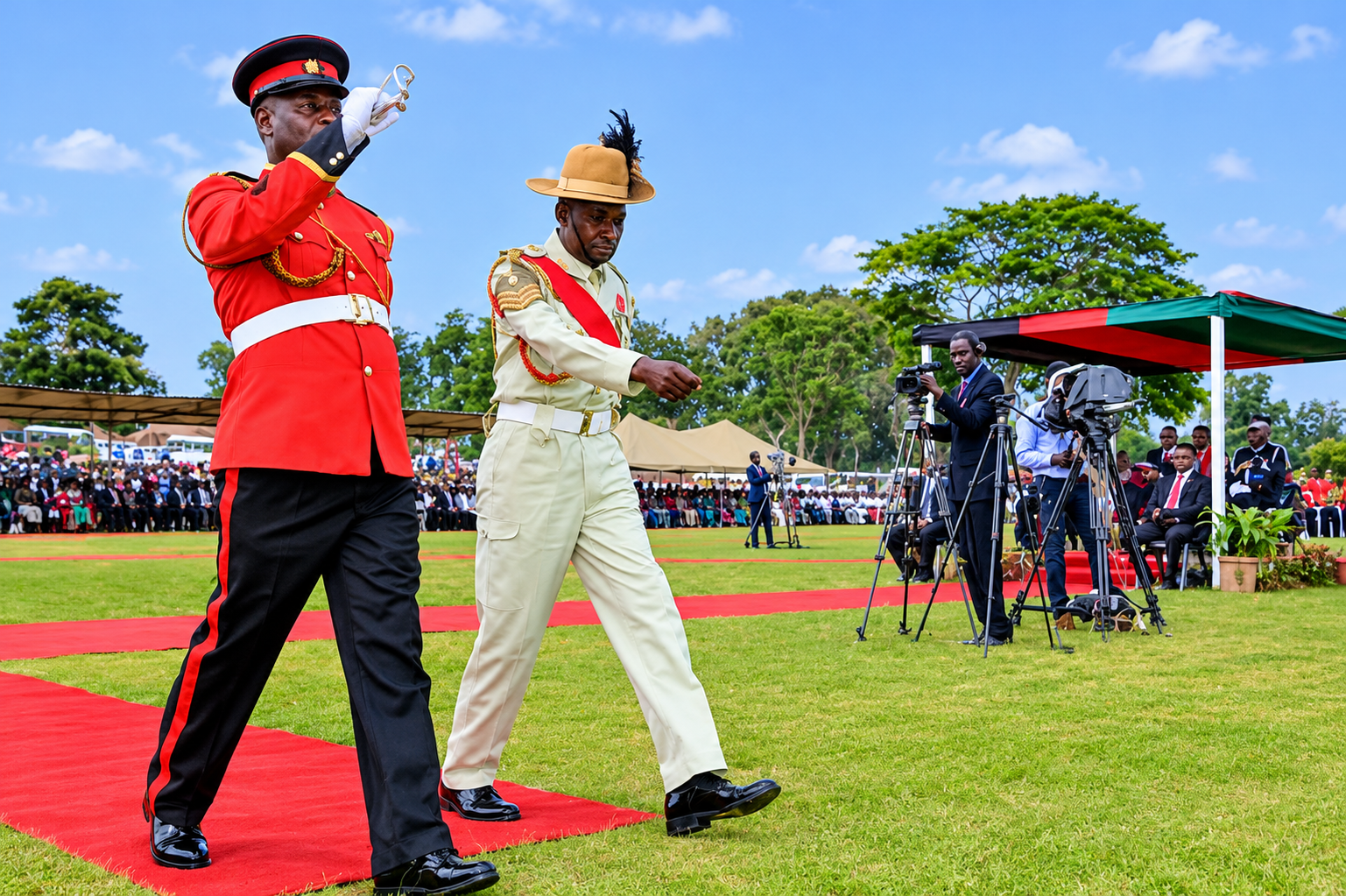
Chinua Achebe’s Things Fall Apart (1958), Ngugi wa Thiong’o’s Decolonising the Mind (1986), and Bill Ashcroft et. al’s The Empire Writes Back: Theory and Practice in Postcolonial Literatures (1989) are rooted in reclaiming the colonised peoples’ narratives. Thus, the bugle call, or trumpet, titled “The Last Post,” followed by a two-minute silence, should be revised to fit the African context because we are remembering different things from the colonisers. While we commemorate colonial betrayal, the British commemorate success and fecundity. Just as the poppy flower carries different meanings and symbolism rooted in Western mythologies, Africa, in its re-mythologisation, should use floriography, the language of flowers, to represent betrayal and suffering. Floriography would sell faster than the Western poppy flower. British military veterans are pensioned while Malawian military veterans precariously depend on localised public charity.
This stark colonial legacy entails that no matter how many wreathes we lay on memorial tombs and pillars in Zomba, Lilongwe, and Mzuzu, it will not please the ancestors.
In Africa, masks are reincarnations of the ancestors who participate in the drama of the living. To avoid what Chimamanda Ngozi Adichie terms “the danger of a single story” (2009), the Malawian dirge in floriography esotericism should replace the British trumpet in remembering those who shed their blood for the coloniser’s cause. We cannot mourn our dead while singing the song of the killer. In Wole Soyinka’s Death and the King’s Horseman, Amusa refuses Simon Pilkings, the British District Officer, knowledge about the impending ritual death of Elesin Oba because the white man is clad in traditional masks, the uniform of death.
Conclusion
The tendency to do everything the British way despite claiming independence for sixty-two years reflects pathological symptoms ingrained in colonial malaise.
African cultural heritage is textured with memorial overtones and war calls from the collective community, and we need not celebrate coloniality instead of tapping into our repositories of knowledge. Talking drums, animal horn trumpets, the Namuru war horns, the Kudu horns, and the Kakaki war calls are significant forms of indigenous communication in Africa that would speak to our ancestors. The British Bugle Call’s monotony on Memorial Poppy Day erodes our sense of value in Africanness.