Urban Transport · Blantyre
The Hidden Costs of Kabaza
Motorcycle taxis move a city that buses can't reach — but behind the convenience sits a toll of accidents, exploitation, and a regulatory system that barely exists.
Motorcycle taxi, also referred to as ‘Kabaza’, has become a popular informal mode of transport in Malawi, especially in urban and peri-urban areas. Much as this mode of transport is convenient and affordable in that it offers mobility and employment opportunities for the vulnerable youths, the said industry has experienced unsafe practices, exploitation, weak regulatory frameworks, and socio-economic vulnerabilities. Empirical studies from some cities and towns indicate that motorcycle taxis, though convenient, can exacerbate poverty cycles, insecurity, and to some extent urban disorder.
In Blantyre, motorcycle taxis are generally visible in Limbe and Blantyre and other residential locations. This article examines the hidden costs of motorcycle taxis, highlighting safety risks, exploitation, gendered vulnerabilities and gaps in regulatory frameworks.
Why Motorcycles are Attractive
The motorcycle taxi business is attractive for the following reasons: First, it generates income for motorcycle owners. Empirical studies have shown that 50% of those that operate the motor cycles are not the owners of the motor cycle (Law et al., 2023).
Second, it is a source of employment for many people, especially the youth in the 17–24 age bracket. Most of such youth are poor and with little education.
Third, motorcycle taxis are seen to be faster and more convenient than traditional forms of public transport. Motorcycles take people to places where minibuses may not reach.
The Dark Side of Motorcycles
The benefits of motorcycles notwithstanding, there are a number of risks associated with this mode of transport. First, motorcycle taxis are attended by serious road safety concerns.
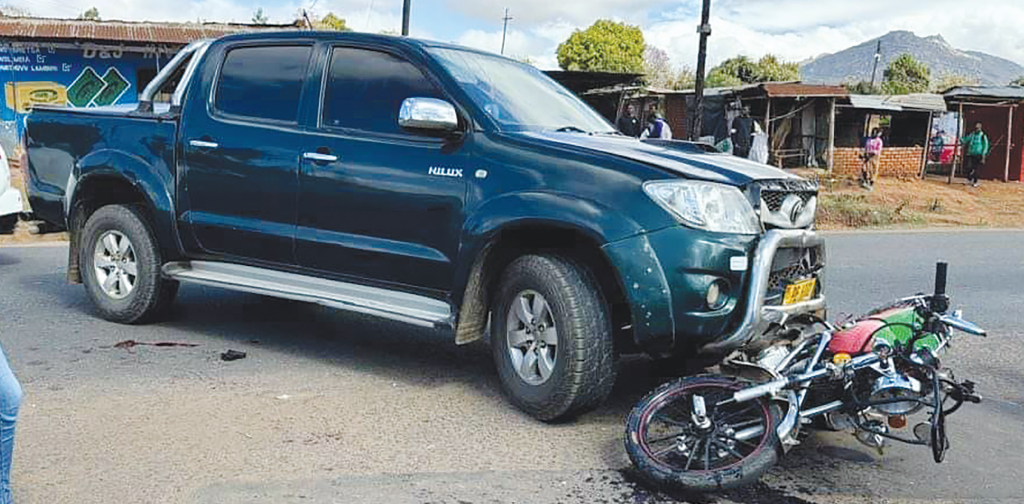
Between 2020 and 2023, 5466 motorcycle related accidents were reported, claiming 472 lives, representing an average of 118 deaths per year.
In the first quarter of 2025, 227 of such accidents were reported in Blantyre (Blantyre Police, 2025). A report from Queen Elizabeth Central Hospital shows that in 2021 alone, 63.4% of accident victims were involved in motorcycle accidents, with 174 of the victims being between 18 and 28 years of age.
The gravity of motorcycle accidents is exacerbated by the fact that most motorcycle operators and passengers do not wear helmets.
In fact, 20% of reported accidents involve head injuries, causing head trauma. The high incidence of motorcycle accidents has put enormous pressure on hospital resources.
One of the factors contributing to the increasing motorcycle accidents is overloading — some motorcycles carry more than three people, with some passengers sitting on top of their luggage. Blantyre Traffic Police emergency crackdown in Blantyre CBD early this year intercepted over 150 motorcycle operators, most of whom were found guilty of overloading.
The second negative aspect of motorcycle taxis is exploitation and abuse of operators. Most motorcycle operators are either not paid or underpaid for their work. They are also targets of robbery. Recently, a number of motor cycle operators have been found dead, with their motorcycles stolen by their assailants. Some female passengers exploit the operators by offering sex as a form of payment. Sometimes, female passengers are subjected to sexual harassment by motorcycle operators. In addition, some young people drop out of school in search of quick livelihood opportunities.
The third downside of motorcycle taxis is that they create chaos and unnecessary traffic congestion in the city. Absence of motor cycle lanes on most city roads has orchestrated traffic conflicts with vehicles and pedestrians. Many motorcyclists tend to lack lane discipline.
Weak Regulatory Environment
These shortcomings of the motorcycle taxis are reinforced and perpetuated by a weak regulatory environment. To begin with, most motorcycle taxis in Blantyre are not officially registered. In 2025, for instance, only 12,000 out of 2 million operators were registered, representing a paltry 0.6% registration rate. Further, the majority of the motor cycles are not insured, posing risk both to the operator and the passengers in case of an accident.
Currently, Blantyre City Council does not have the capacity to regulate motorcycle taxis due to lack of by-laws and human resources.
Way Forward
From the foregoing, it is clear that something has to be done to correct the social ills stemming from motorcycle taxis.
There is need to formalize the motorcycle taxi business by training operators in the Highway Code.
Those who have been trained should be issued licenses, and law enforcers should ensure that only those with motorcycle licenses are allowed to operate these taxis.
- Registration. All motorcycles should be properly registered by the Department of Road Traffic and Safety Services. Registration numbers should be issued and affixed to each motorcycle for identification, especially in case of accidents.
- Roadworthiness. Motorcycles should undergo regular inspection to ensure they are roadworthy. Those that pass should be issued a certificate of fitness by the Road Traffic and Safety Services Department, just as is the case with motor vehicles.
- Protective gear. All motorcycle operators and passengers must be required to wear safety helmets and reflective vests. Reflectors are even more critically important at night to enhance visibility.
- By-laws. Clear by-laws must be established to regulate the operations of motorcycle taxis, indicating the capacity of motorcycles and other considerations.
- Awareness. Campaigns must be carried out to address safety concerns and gender-based exploitation and violence relating to the motorcycle industry.
Conclusion
It cannot be denied that motorcycles have become an integral component of Malawi’s urban transport ecosystem, offering affordable and convenient public transport to the city residents, on the one hand, and, on the other, informal jobs to the youth. However, their operations raise some serious concerns including safety and compliance. Banning motorcycle taxis may not be the best solution to these challenges. Instead, the concerns can be addressed through relevant legislation, enforcement and community awareness.