Political Representation · Malawi
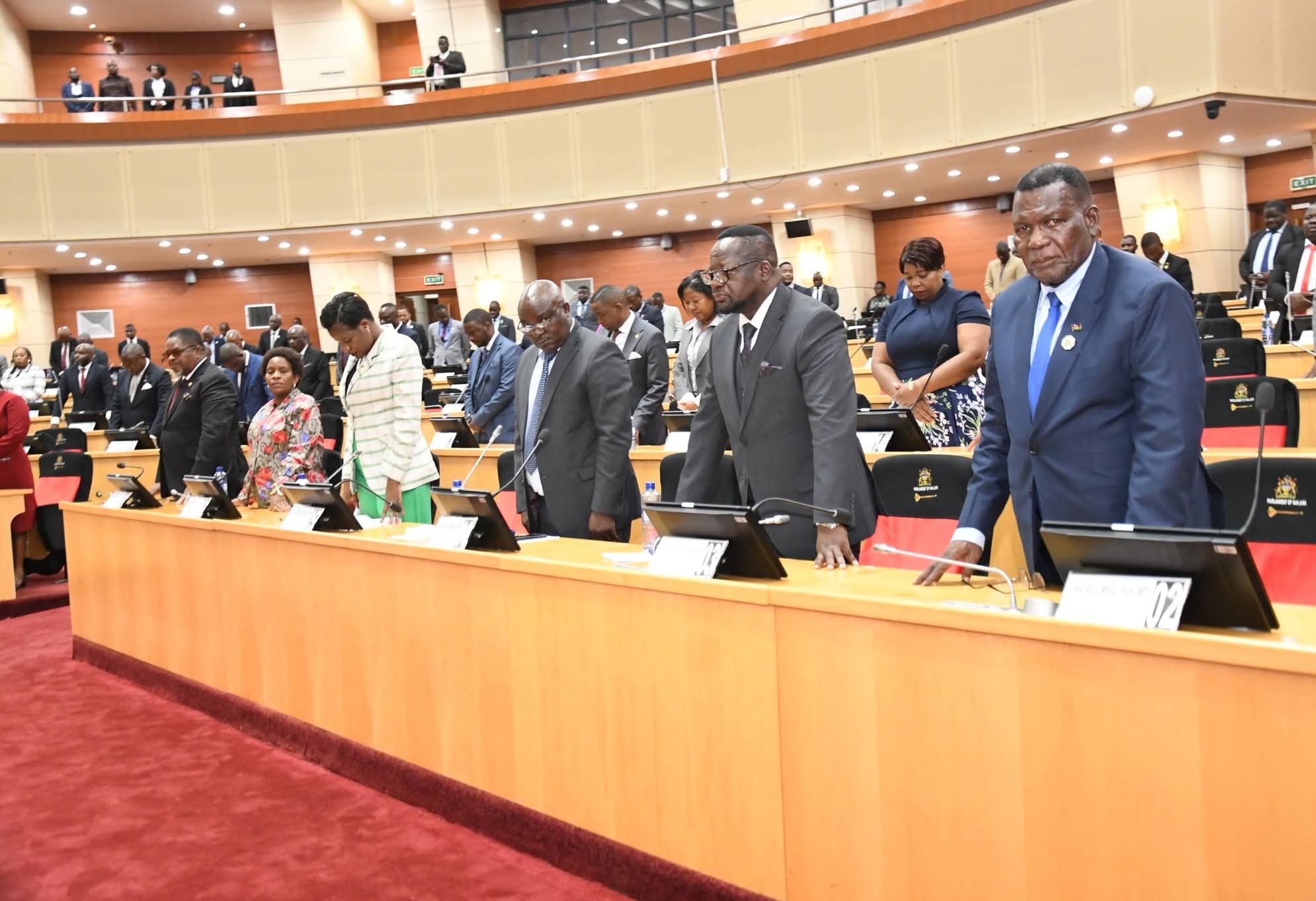
The current Parliament in Malawi, constituted in the aftermath of the 2025 parliamentary elections, is a male dominated institution with 4 out of every 5 Members of Parliament (MPs) being male. In percentage terms, female MPs constitute 21% of Parliamentarians. Interestingly, voter statistics for 2025 show that 57% of the registered voters were women. The current population estimates of Malawi further show that there are more women than men in Malawi, with women estimated to be 51% of the population. Considering these numbers, we can safely argue that women of Malawi require sustained substantive representation from male MPs if the country is to have a truly democratic parliament. Male MPs as such carry an important duty of representing women and advancing their interests at the constituency and national levels. What is important to remember is that a male MP is capable of substantively representing women and also that being a female MP does not necessarily mean one will automatically provide substantive representation for women. Men can represent women in theory and in practice. History shows that male MPs have supported bills that benefited women and girls, contributed to debates and budgetary allocations in ways that benefit women and girls and also actively connected with women’s groups and community-based organizations. This article unpacks some of the complexities of women’s representation by male MPs, using three prominent models of political representation — the delegate model, trustee model and the mandate model. It will also highlight some controversies attending the said models in light of feminist theory.
Representation as a Core Duty of an MP
Sources: 2025 election data, national population estimates, Oxfam Malawi (Kayira, 2025)
In Political Science, representation is one of the deceptively simple concepts. Representation means that individuals (agents) are sent into policy-making bodies to make decisions that represent the interests of their constituents (principals) who have authorized them to do so. In the case of Malawi, the authorization comes through the vote. This explanation is simple enough but when some of its elements are interrogated, one begins to see significant complexities. A careful examination of the concept and practice of representation raises the following questions: How does the agent identify the diverse interests of all constituents (principals) and aggregate them into one policy position to advance? Is it even possible to aggregate the diverse interests into one position? Are the constituents as principals capable of understanding complex issues discussed in Parliament, such as including fiscal policy and foreign policy? When such questions are asked we are urged to think deeply about what it means to represent a group of people in the political space.
Representation is a core function of an MP. It has been observed that the majority of women in Malawi are not enthusiastic about democratic governance. Data from the 2025 Afrobarometer survey shows that when asked whether democracy is preferable to any other kind of government, 60 percent of men responded in the affirmative while only 46% women responded in the affirmative. Other respondents comprising 28% of women and 23% of men chose the response ‘in some circumstances a non-democratic government would be preferable’. The remaining respondents comprising 21% of women and 16% of men chose the response ‘it does not matter what kind of government we have’. These numbers warrant further investigation of the lived experiences of women and men in democratic Malawi, including the nature and efficacy of political representation.
Models of Political Representation
Political theorists have come up with different models of political representation to simplify the concept. These models can also shed some light on the ways a male MP navigates their way around the representation of their female constituents. First of all is the delegate model described by Pitkin (1967). In this model, the MP is a direct conveyer of the interests of the constituents. He/she works on the premises that he/she was sent to Parliament to represent the constituents just as a diplomat would represent their country. He/she has limited scope to make his/her own decisions and will even make decisions that he/she personally does not agree with. In our case, the delegate model in its nature would entail that the male MP has to continuously consult women constituents; he would need to make frequent visits to the constituency. Since women’s policy priorities may differ from and even conflict with those of men, the male MP has to actively seek the views of women. From the point of view of feminist theory, however, consulting women may not be as easy at seems. In feminist theory, society is divided into public and private spheres.
Most of the matters that concern women are closed off in the private space, away from the public eye and beyond the remit of public authority.
So then, how does a man get views on certain matters that would often not be openly discussed in public forums, for instance maternal health, women’s economic empowerment, and gender-based violence? To illustrate, in a media interview, a senior official from Oxfam Malawi once described high levels of gender-based violence in Malawi, with 34% of women aged between 15 and 19 having experienced some form of physical violence. Such violence, she argued, has discouraged women from participating in public and political forums (Kayira, 2025). Consulting women on matters that truly matter to them may, therefore, not be as easy as it seems.
The second model is the trustee model. Here, the MP works on the understanding that he/she was elected because he/she has the capacity to act in the best interests of his/her constituents. The capacity could be based on the MP’s education, life experiences or goodwill. The MP is empowered to use his/her personal judgement even though the constituents may actually not agree with it. The MP as such does not need to make frequent consultations but rather takes decisions that are, in his/her judgement, in the best interest of his/her constituents. This is a very useful model because, as stated earlier, some matters discussed in Parliament would be difficult for some sections of the population to comprehend. Applied to the case of male MPs representing female constituents, this model would, from a feminist theory, be found wanting in more ways than one. Are we not creating a fertile ground for those norms of patriarchy that subordinate the interests of women to those of men? How can someone who has no lived experience of what it means to be a woman represent women? Do we not risk having the MP advancing his own agenda? To illustrate this, in the Malawi Parliament, there was heated debate between male and female MPs on the Wills and Inheritance Act. The amendment was passed with the persistence of the women’s caucus in Parliament. The women’s caucus seemed to initially advocate for the amendment, with low support from male legislators.
The third and last model is the mandate model that has arisen on further study of electoral mandates (Fox and Shotts, 2009). This model stands on the premises that MPs are often elected on the wave of a mandate that their political party receives. The political party that the MP belongs to has a manifesto, which we can presume voters have accepted. As such, the MP would represent women by striving not to deviate from what is outlined in the party manifesto when it comes to women’s interests. This model of representation is also problematic in three ways. First of all, party manifestos may not be comprehensive enough to provide practical guidance for decision making on all matters of interest to women. Secondly, even if they have comprehensive guidance, the manifestos may not have been developed in a consultative manner and may not embody the true and changing interests of the women. Thirdly, voter behavior is complicated and parties are voted in for many reasons besides the manifesto. Voters may actually vote for a party without reading its manifesto or even vote for the party despite not agreeing with its manifesto. As such, representation cannot exclusively be predicated on the manifesto.
Representation as a Balancing Act
In the real world of politics, individual MPs seldom use a single model of representation but tend to change the model of representation from time to time or even from one issue to another. In other words, a male MP can choose to be a delegate on one issue, a trustee on another issue and a party mandate holder on a different matter.
As a delegate, the MP needs to actively consult women directly in order to identify and respond to their needs.
In matters where acting as a delegate is not possible or practical, he becomes a trustee or a party mandate holder. He uses his own judgement or the guidance provided by the party in making his decision. Representation of women therefore becomes a delicate balancing act for the male MP, requiring careful consideration of what model to use in each circumstance. MPs do this on instinct all the time without even thinking about it, without even knowing the models of representation. But in order to better represent women, they may need to be more intentional about how they go about their business.