Most children who complete primary school in Malawi leave without a working understanding of scientific concepts or the sense of curiosity that questioning and experimentation are meant to cultivate (Chikasanda, Mtemang'ombe, Nyirenda, & Kapengule, 2024). This outcome is neither accidental nor attributable to a single cause. It results from a pattern of teaching and learning that privileges rote learning — the memorisation of facts, definitions, formulae, or procedures through repetition, largely without engaging their underlying meaning (Ausubel, 1968; Biggs & Tang, 2011; Ormrod, 2020). Applied to primary science, rote learning is visible when learners reproduce textbook definitions and stock answers to pass examinations rather than observe, question, experiment, and discuss in ways that would let them construct scientific understanding for themselves. This article argues that rote learning in Malawian primary science classrooms should be understood not as a failure of individual teachers, but as a predictable response to three interacting conditions: teachers' limited preparation in how learners actually learn, structural classroom constraints that make learner-centred practice difficult to sustain, and a chronic shortage of teaching and learning materials.
Establishing the Gap
Before explaining why rote learning persists, it is worth demonstrating that the achievement gap it produces is not merely anecdotal. Malawian learners consistently perform below the regional average on cross-national learning assessments, with the country's Southern and Eastern Africa Consortium for Monitoring Educational Quality (SACMEQ) scores falling below those of comparator countries across the assessed years (UNICEF Malawi, 2021). At the primary-leaving stage, performance has also been unstable rather than steadily improving: the 2024 Primary School Leaving Certificate of Education (PSLCE) pass rate fell to 86.1 percent, a decline from 87.77 percent the previous year (Times Group, 2024). Because Primary Science is one of the six subjects examined at PSLCE level, national fluctuations of this kind are a reasonable proxy for instability in core subject learning, science included.
Sources: Times Group (2024); UNICEF Malawi (2025) Education Management Information System data.
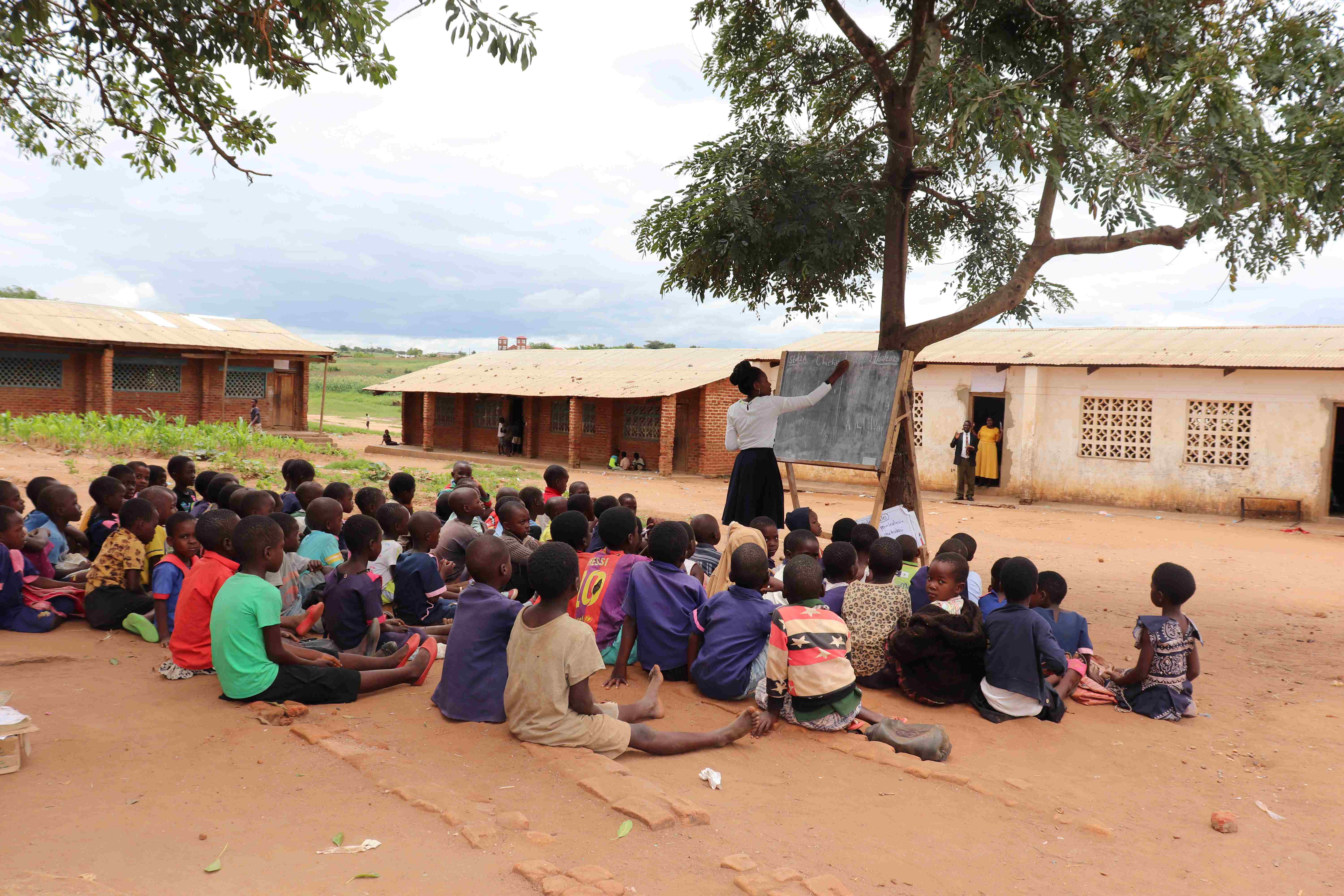
Overcrowding, one of the classroom conditions discussed below, illustrates the same gap differently. According to the Ministry of Education's own Education Management Information System data, 66 percent of primary schools in Malawi had pupil-to-permanent-classroom ratios above 90 in the lower primary grades in 2024, and 45 percent had a pupil-to-qualified-teacher ratio above 90 at the same level (UNICEF Malawi, 2025). These are not marginal figures; they describe the typical, not the exceptional, Malawian primary classroom. Taken together, the assessment data and the staffing and infrastructure data corroborate one another: Malawian primary learners are, on average, not acquiring the scientific literacy the curriculum intends, and the conditions under which primary science is taught help explain why.
Why Rote Learning Persists
The persistence of rote learning in Malawi can be chalked up to three key factors: limited teacher preparation in learner-centred pedagogy, classroom-level constraints, and shortage of teaching and learning materials.
Limited Teacher Preparation
A central explanation for the persistence of rote learning is that many Malawian primary teachers have had limited preparation in learner-centred, inquiry-based pedagogy, which in turn shapes how well they understand the process by which their pupils actually learn science
(Chikasanda et al., 2024; Chiphiko & Shawa, 2014). This matters because how a teacher believes learning happens directly shapes what a teacher does in the classroom.
Piaget (1954) argued that children construct knowledge through active engagement with their environment rather than by absorbing it passively, while Vygotsky (1978) showed that this construction is also social: learners advance farthest when guided within their zone of proximal development by a more knowledgeable other. A teacher who has internalised these ideas designs science lessons that give learners something to do, not only something to hear. Harlen (1985) makes the pedagogical implication explicit for science specifically, arguing that a teacher who does not understand how learners learn cannot select activities that keep "thinking and doing" closely linked, and will default to activities that ask learners only to receive and recall information.
Two further points follow. First, Gage (1975) contends that effective teaching begins with identifying where learners already are and building forward from that point. Driver (1983) makes the same claim through analogy, noting that a guide cannot give useful directions without first knowing where the traveller is starting from. Applied to Malawian classrooms, this means that
a scheme of work or lesson plan that ignores what learners already know from home and prior experience is unlikely to produce meaningful science learning, however well-intentioned the teacher.
Second, because teacher-preparation programmes in Malawi have historically given limited emphasis to inquiry-based methods (Chiphiko & Shawa, 2014), many teachers are not simply choosing rote learning over inquiry; they have not been equipped to plan and manage inquiry-based lessons with confidence at scale, particularly under the conditions described in the next section.
Classroom-level Constraints
The second factor behind the persistence of rote learning in Malawi is classroom-level constraints. Even a well-prepared teacher faces serious obstacles in an overcrowded classroom. Malawi's national pupil-teacher ratio and pupil-qualified-teacher ratio remain high by regional and global standards, and, as the EMIS data cited above show, conditions in lower primary are considerably worse than national averages suggest, with a large share of schools exceeding ratios of 90 pupils per classroom or per qualified teacher (UNICEF Malawi, 2025). This has three compounding effects on science learning specifically.
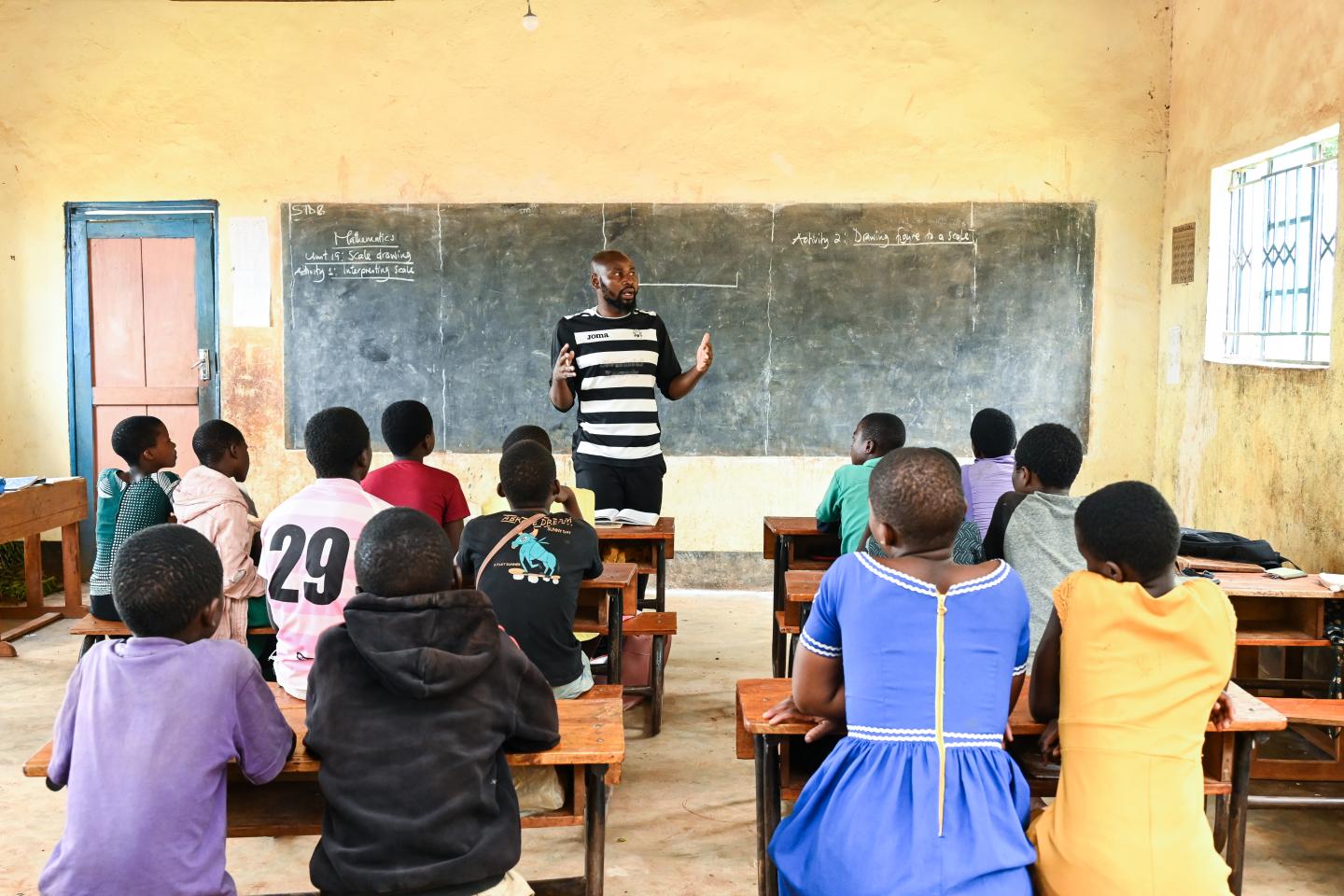
First, overcrowding reduces the individual attention a teacher can give each learner. Science teaching depends on a teacher being able to identify a learner's specific misconception — for example, a confused idea about why objects float — and address it directly; this is difficult to do consistently across a class of eighty or ninety pupils. Second, overcrowding restricts practical work. Science is best learned through experimentation and investigation, but organising hands-on activities, or even moving safely between groups to supervise them, becomes impractical in a packed classroom, pushing teachers toward talk-and-chalkboard delivery by default rather than by preference. Third, overcrowding undermines classroom management: teachers in very large classes spend a disproportionate share of lesson time on discipline and control rather than on the extended discussion and inquiry that science learning requires (UNICEF Malawi, 2024; Barnes et al., 2026). Inadequate classroom space compounds all three effects, since insufficient infrastructure limits how far learner-centred, practical lessons can be implemented even where a teacher wants to attempt them.
Shortage of Teaching and Learning Materials
A third, related constraint is the chronic shortage of science textbooks and practical materials in Malawian primary schools (UNICEF, 2024; Chikasanda et al., 2024). Where this shortage exists, its effects are cumulative rather than isolated. Without adequate materials, practical activities that would otherwise deepen conceptual understanding cannot take place; as a result, learners' engagement with the concepts stays superficial. Without hands-on activities, learner motivation and interest in science decline, since science taught purely through recitation offers little of the excitement that first draws children to the subject. And without materials to support learner-centred approaches, teachers are pushed back toward the same lecture-and-recall methods that overcrowding already encourages, reinforcing rote learning as the default mode of instruction rather than an occasional fallback.
Conclusion
The evidence reviewed here supports two related conclusions. First, the learning gap in Malawian primary science is real and measurable, visible in below-regional assessment performance, unstable PSLCE outcomes, and staffing and infrastructure data that describe severely overcrowded lower-primary classrooms as the norm rather than the exception. Second, rote learning should be understood as the predictable outcome of three reinforcing conditions — limited teacher preparation in learner-centred pedagogy, overcrowded and poorly resourced classrooms, and a shortage of teaching and learning materials — rather than as a simple failure of individual teacher effort or will. This reframing matters for policy.
Addressing rote learning in Malawian primary science will require more than exhortations to teachers to "teach differently"; it requires investment in pre-service and in-service training that builds teachers' understanding of how learners learn, alongside deliberate reduction of pupil-teacher and pupil-classroom ratios and consistent provision of basic science materials.
Until these structural conditions change, rote learning is likely to remain the rational response of teachers working within a system that gives them little practical alternative.