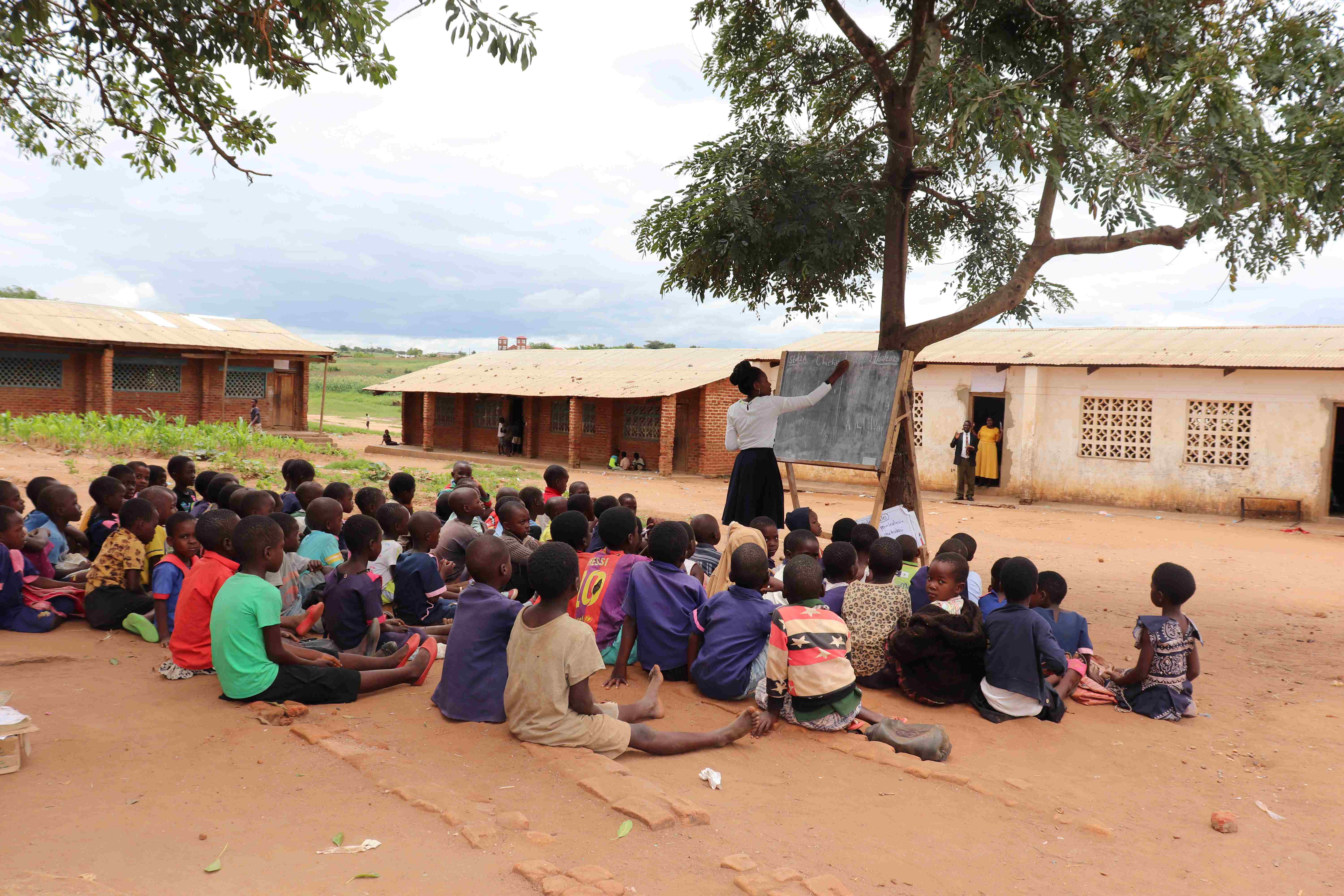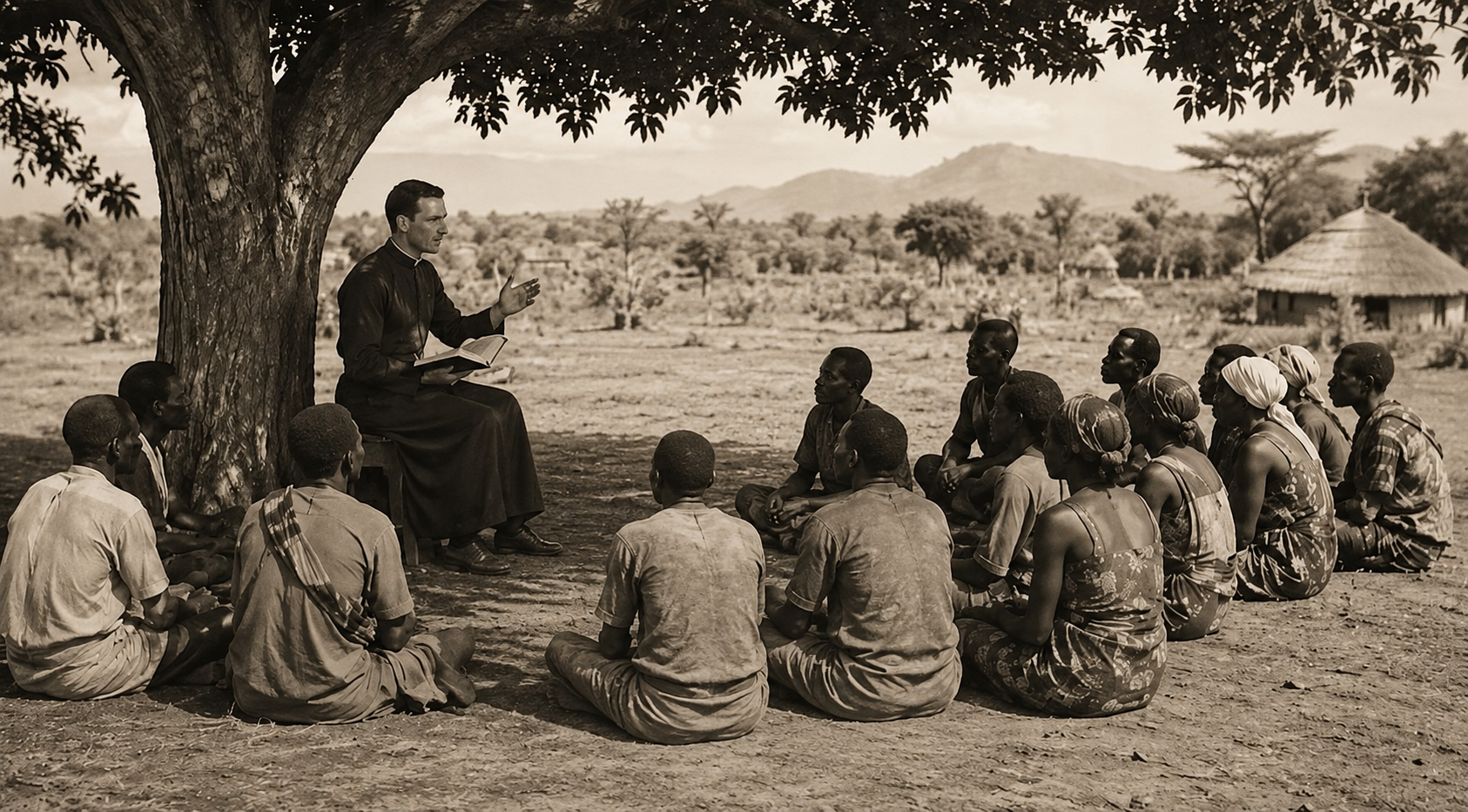
Malawi does not suffer from a shortage of intelligence. It suffers from a shortage of follow-through. Walk into any ministry, district council, or university planning unit in this country, and you will find documents of genuine technical sophistication: development strategies with clear pillars, measurable targets, timelines, and budgets that would not look out of place in Whitehall or Washington. Malawi Vision 2020, the successive Malawi Growth and Development Strategies, and now the Malawi 2063 Agenda were all conceived and written by capable Malawian minds. The problem confronting this country is therefore not a poverty of ideas. It is what policy scholars such as Merilee Grindle have long called the "implementation gap" — the widening distance between what a nation writes down and what it actually does. This article argues that Malawians are, in fact, excellent planners and capable policy architects. Our failure lies almost entirely downstream of the drafting table, in the unglamorous work of execution, supervision, and enforcement. I make this case by examining, in turn, four unmet promises of Vision 2020; one policy that shows implementation can work when it is taken seriously; three flagship ideas in the Malawi 2063 Agenda that risk repeating the same pattern; and the curious fact that some of our neighbours have taken our own written frameworks and implemented them more faithfully than we have.
The Planning Genius and Why It Is Not the Problem
A review of a few of Malawi's strategic documents makes it clear that the country is exceptionally good at drafting policy documents. Vision 2020, launched in the late 1990s, was a genuinely ambitious document, aligning economic, social, and environmental targets under a single long-term national vision, decades before this became fashionable elsewhere. The Malawi 2063 Agenda, a domestication of the African Union's Agenda 2063, is organised with real analytical discipline: three development pillars, supporting enablers, and successive Malawi Implementation Plans intended to translate the vision into ten-year, budgeted phases.
Development economists Lant Pritchett, Michael Woolcock, and Matt Andrews describe a common trap in developing countries, which they term "isomorphic mimicry": governments adopt the outward form of well-functioning institutions and plans without building the underlying function required to make them work.
Malawi's plans, to their credit, rarely fail this test on form. Where they fail is in the machinery built to enforce them: the monitoring units that are never adequately staffed, the budget lines that are never fully released, and the accountability mechanisms that exist on an organogram but not in practice.
Vision 2020: Four Promises, Four Disappointments
Vision 2020 set out a coherent long-term destination for Malawi. Four of its central promises clearly illustrate the implementation gap. First, food self-sufficiency. Vision 2020 envisioned a Malawi that had permanently secured its food supply. Instead, the country experienced severe hunger in 2001–2002 and again after the 2015–2016 El Niño-induced drought, each time requiring humanitarian appeals rather than proving national self-reliance.
Second, industrial transformation. The vision explicitly called for a shift from an agriculture-based economy to a semi-industrialised one. Two decades later, Malawi still exports raw, unprocessed produce, and tobacco remains disproportionately central to national export earnings – precisely the structural dependency the vision sought to end.
Third, reliable and widely accessible electricity. Vision 2020 anticipated a modernised, dependable power supply supporting industry and households alike. Instead, load-shedding by the national utility has remained a routine part of Malawian life, and large parts of the rural population still have no connection to the grid.
Fourth, middle-income status. Vision 2020's overarching ambition was for Malawi to graduate into the ranks of middle-income nations. Malawi instead remains classified among the world's least developed countries, with per-capita income growth too slow and too uneven to close the gap envisioned in the plan.
None of these four failures reflects a badly designed plan. Each reflects a plan whose implementation was never adequately resourced, monitored, or protected from short-term political interference. As the saying goes, the road to hell is paved with good intentions.
When Implementation Is Taken Seriously
It would be unfair to suggest that Malawi never implements anything well. The One Village One Product (OVOP) initiative, introduced in the early 2000s with support from Japan's development cooperation agency and inspired by a similar Japanese rural development movement, is a useful counter-example. Where OVOP succeeded, it did so because implementation, not just design, received sustained attention: village cooperatives were organised around specific local products, given technical training, and linked to markets, with a dedicated implementation secretariat following through over years rather than abandoning the idea after the launch ceremony. The lesson is not that OVOP solved rural poverty; its reach and scale remained modest. The lesson is structural: when a Malawian policy is paired with a standing institution whose sole job is to see it through, results follow. A similar, if more contested, pattern can be seen in the early years of the Farm Input Subsidy Programme (FISP), which is widely credited with helping Malawi move from a maize-deficit to a maize-surplus position for several seasons in the mid-2000s, before administrative and fiscal strain eroded its effectiveness. Both cases point to the same conclusion: Malawi's capacity problem is not cognitive. It is institutional stamina.
Malawi 2063: Good Policies or Good Prose?
The Malawi 2063 Agenda is, on its face, an intelligent and well-structured document. Yet several of its flagship ideas already show the early symptoms of the paper trap that swallowed Vision 2020.
The Shire-Zambezi Waterway is the clearest example. The idea of opening Malawi to the sea via the Zambezi River is not new; it has appeared in national planning documents for decades, revived once more under Malawi 2063 as a route to cheaper trade and reduced landlocked isolation. Its persistent reappearance in successive national plans, without the dredging, engineering, and diplomatic work required to make it real, is itself evidence of a policy idea kept alive on paper far longer than it has been kept alive in practice.
The industrialisation pillar, with its promise of Special Economic Zones and value-added agro-processing, is similarly compelling in language but thin in operational detail. Announcements of new zones and processing hubs are frequent; fully functioning, investment-ready zones remain few, and the value-addition Malawi still struggles to capture in tobacco, tea, and sugar shows how far the rhetoric has outrun the factories.
The "mindset change" enabler is perhaps the most telling of all. Malawi 2063 rightly identifies attitude and culture as barriers to development, but a call for citizens and leaders to change their mindset is, by its nature, difficult to measure, budget for, or hold anyone accountable for. Without translation into specific behavioural targets, performance incentives, and civic education programmes with real budgets, mindset change risks becoming the most eloquent and the least implemented sentence in the document.
Exporting Our Paperwork
There is a further, almost embarrassing dimension to this pattern: some of Malawi's own written frameworks appear to travel better than they are implemented at home. Malawian education practitioners have long observed, largely anecdotally rather than through systematic comparative study, that our secondary school curriculum frameworks have been consulted by planners in some neighbouring education systems, who then proceeded to fund, train for, and roll out similar reforms more fully than Malawi itself has done. Whether or not every such account can be independently verified, the underlying pattern is familiar enough to Malawian professionals: our documents are frequently good enough to be borrowed, yet our own implementation of them frequently falls short of what the documents themselves demand.
A nation whose ideas are worth copying, but whose practice is not worth emulating, has diagnosed its own weakness rather precisely
— it is not the writing that other countries want; it is the writing plus the will to carry it out.
Conclusion
The Nigerian novelist Chinua Achebe opened his 1983 political essay with a line that Malawi would do well to adapt to its own condition: the trouble with Nigeria, he wrote, is simply and squarely a failure of leadership. The trouble with Malawi, this article has argued, is more specific still: it is simply and squarely a failure of implementation. Our planners are not the weak link. Our plans are frequently strong enough to be studied and copied elsewhere.
What Malawi needs now is not another consultative workshop to produce a better-written vision, but the unglamorous architecture of delivery: independent monitoring bodies with teeth, budget releases that match budget promises, sanctions for missed milestones, and political leadership willing to be judged on results rather than on launch-day speeches.
Malawi has already shown, through OVOP and the early years of the input subsidy programme, that when implementation is taken as seriously as planning, results follow. The task before us is not to think harder. It is to finish what we have already, quite intelligently, started.