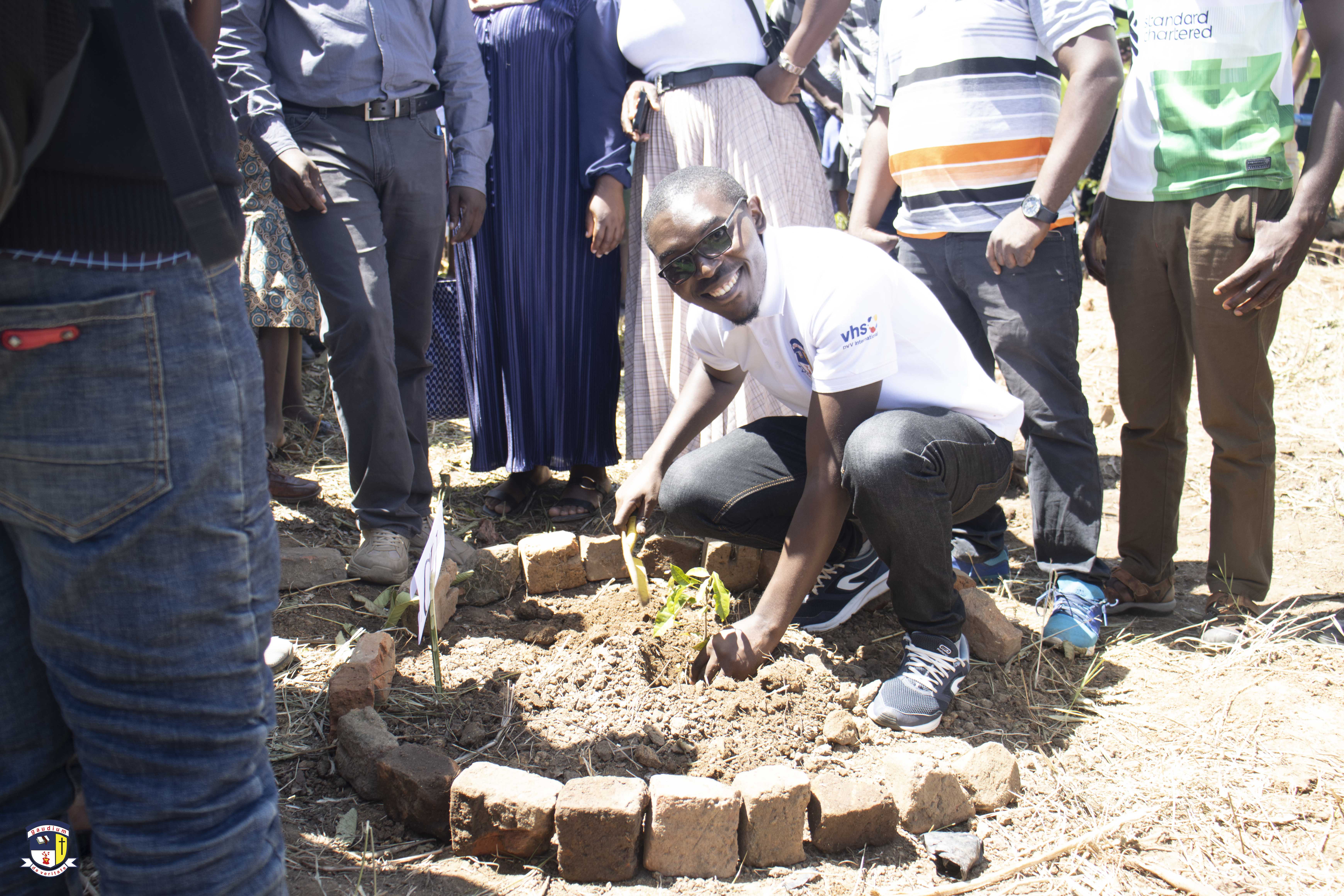
In the recent past, communities, the government, and Non-Governmental Organisations (NGOs) have been promoting tree planting campaigns as a response to climate change, biodiversity loss, and land degradation. The academia, in turn, has propagated tree planting as a viable pathway to environmental sustainability. Malawi Agenda 2063 further enshrines this exercise as one of the enablers to attaining a self-reliant nation. This optimism, however, lies in a complex reality where more trees have been planted but their growth is yet to be monitored, begging the question: Who monitors these trees after they have been planted? What tools, if any, are used to monitor their survival and growth? Whose role is it to ensure they have grown? In the era of digital technology, can digital tools be used to monitor the growth of trees?
From Planting to Fostering Growth
It is a truism that trees have many environmental, economic and social benefits. Environmentally, trees serve as carbon sinks by absorbing carbon dioxide, hence mitigating climate change. At the community level, in rural areas, trees support livelihoods through agroforestry systems, beekeeping initiatives, and the provision of firewood. In urban areas, trees reduce urban heat island effects, improve air quality, and help manage stormwater. These multimodal benefits explain why there is a multi-stakeholder tree-planting drive. Nonetheless, there is little evidence that these trees are properly monitored or survival and growth. Indeed, planting trees does not automatically lead to sustainable outcomes.
Borrowing from the first enabler of the Malawi Vision 2063, there is need to change our mindsets from “planting trees” to “growing community forests.” Tree planting has tended to focus on the number of seedlings planted, whilst community forests focus on ecosystem integration and long-term management. Research has shown that community forests are serving as cornerstones of sustainable natural resources management, as communities own what they have planted.
There have been debates on who promotes deforestation. Who sells charcoal if not the same communities that plant them? Some people have promoted adages like “cut one tree and plant ten more”. Even if they plant ten more trees, do they monitor them until they are ready for harvest? When communities are less involved in planning, implementation, and monitoring their projects, sustainability is limited. Recent studies have shown that tree planting campaigns that are poorly designed or that inadequately involve communities tend to fail to restore ecosystems or deliver the expected advantages to the communities. Choice of trees to plant in their communities is also important in safeguarding biodiversity, as in some cases ‘bad trees’ would promote loss of biodiversity and disrupt ecosystems if inappropriate species are introduced into an ecosystem. The current tree planting campaigns lean towards symbolic exercises designed to tick administrative boxes. Consequently, the planted trees are not site-specific, not monitored, and are often planted without the involvement of communities.
Involving Grassroots Communities
As monitoring is the spine of sustainable tree planting, the use of a community approach is important as it ensures that planted trees survive, grow, and deliver intended environmental and socio-economic benefits. Traditionally, community forests are governed through local systems, local institutions, community rules, and collective action. Therefore, at the community level, monitoring being a continuous process would easily be attained. At the national level, periodic monitoring would also support accountability as district councils, departments, organisations, and ministries would easily allocate proper resources to these initiatives in supporting environmental frameworks and evaluating their progress towards climate targets. A shift from simply planting trees to community-based monitoring could serve as an inclusive and cost-effective approach to sustainable reforestation campaigns done annually. It can empower communities to track trees being planted, their growth, and their maintenance. It can foster ownership and improve data collection over time.
In many communities, planted trees are not monitored due to challenges such as lack of incentives, complex land tenure systems, lack of role specification, limited coordination with other sectors, low levels of extension services, and limited technical capacity. In the district councils, main challenges include limited funding, limited capacity in using digital monitoring tools, poor data management, and limited coordination with other sectors. With these challenges, the approach has always been to focus on the number of trees planted as compared to the number of trees and community forests sustained after the tree planting campaigns. Instead of ensuring long-term environmental sustainability, this approach has glorified short-term achievements in the name of the number of trees planted.
Leveraging Digital Tools
Despite these challenges at both community and national levels, low-cost technologies are emerging and have the potential to improve the monitoring of trees and community forests at large scale. Among others, these technologies include data analytics, artificial intelligence (AI), drones, mobile-based applications, geographic information systems (GIS), and remote sensing. In contrast to the traditional approaches of counting trees, these tools could enhance and improve how trees are planted, how trees are monitored, how forests are governed, and how community forests could be managed. With proper participatory approaches, the nexus between digital innovations and community forest governance could define a new frontier in environmental sustainability.
Conclusion
Merely planting millions of trees does not solve the problem of climate change or environmental degradation. With the great responsibility of monitoring what has been planted using sound integrated systems and available digital tools, community forests could play as transformative tracking mechanisms in ensuring environmental sustainability. The availability of community forests could equally benefit communities in terms of carbon trading. The current question should be how many community forests do communities have and own, as compared to how many trees have been planted. This could be an easy tracking tool beyond the current symbolic gestures from different organisations and government ministries, departments, and agencies (MDAs). With this approach, communities would easily attain the benefits that come along with community forests. Sustainability should not simply involve counting the trees planted or the number of trees that have survived. Nationally, there is a need to have a standardized system of monitoring tree planting activities using GIS and remote sensing with proper funding, data-driven approaches, and effective integration with Malawi Vision 2063 enablers. When all is said and done, what matters is not just the number of trees planted but the number of trees communities have nurtured for future generations.
Category:
Ruminations