Mathematics as a core subject mainly deals with how numbers, quantities, patterns and relationships can be logically analyzed and applied to solve daily life problems. The subject is compulsory in Malawian Secondary Schools because it provides students with important knowledge and skills needed for different programmes in colleges as well as everyday life. According to the Malawi Secondary School Mathematics Syllabus, Mathematics is a vehicle for the development and improvement of a person's intellectual competence in logical reasoning, spatial visualization, analysis and abstract thought.
Learners develop such skills as computation, reasoning, critical thinking, and problem solving through the learning and application of mathematics. Mathematics is also vital in enabling learners to communicate competently and effectively in different contexts using mathematical language. These skills are valuable not only in learning other disciplines, but also in everyday life and in the workplace. The development of highly skilled, scientifically and technologically based human resources requires a strong grounding in mathematics. Mathematics is also a subject of enjoyment and excitement, which offers students opportunities for creative work and moments of enlightenment and joy. A study titled Cognitive Foundations of Early Mathematics by L. Hannah and others (2021) indicates that basic numerical, executive function and spatial skills serve as cognitive foundations for early mathematics achievement, and these skills usually predict later academic success.
Challenges in Learning Mathematics
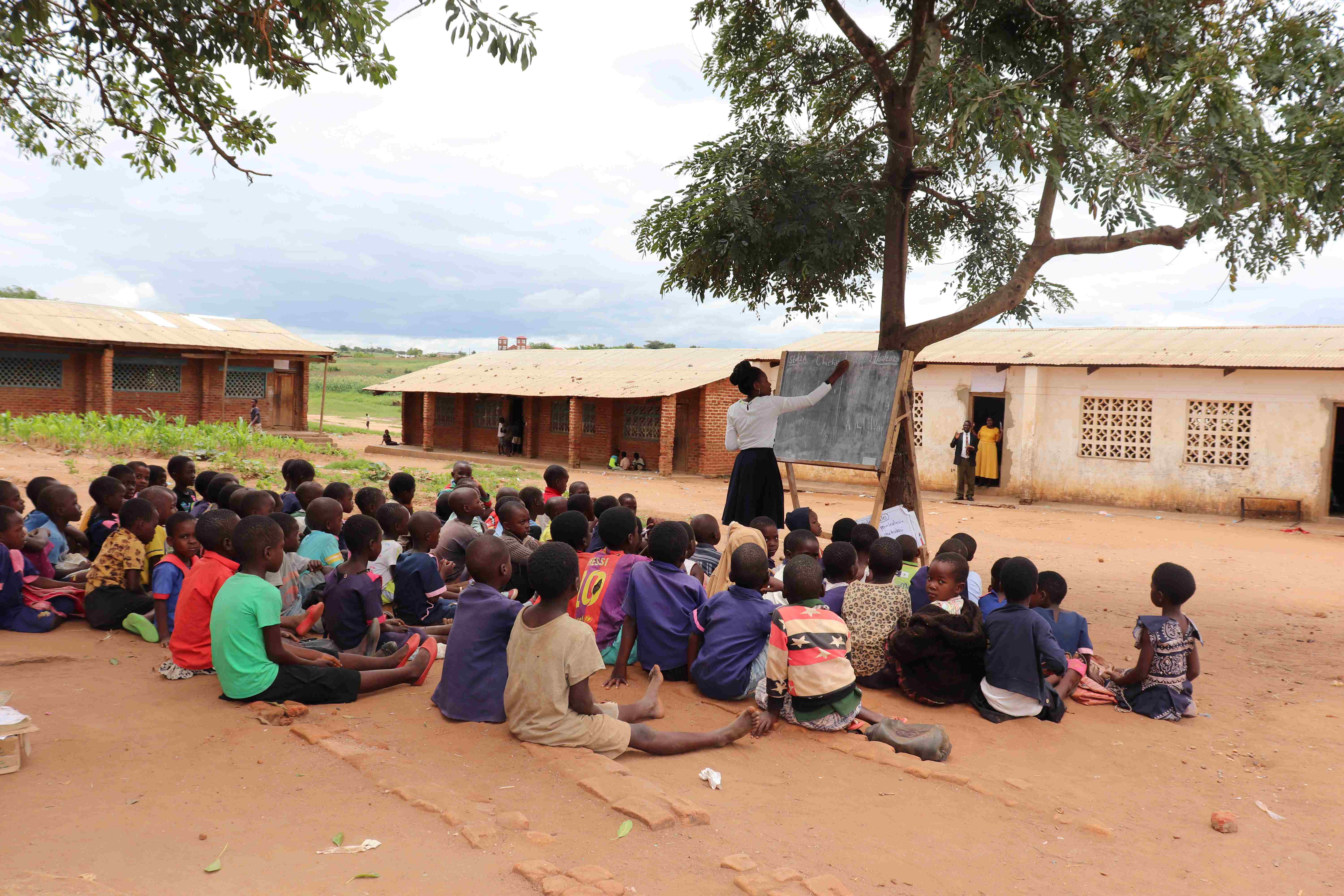
Although Mathematics is vital in achieving Malawi's long-term vision popularly known as Malawi 2063, there are many challenges faced by Secondary School students when learning the subject. The challenges include lack of proper foundational skills, unequal distribution of resources, lack of proper teaching methods, language, large classroom sizes, students' attitude and lack of support from their homes. Most Secondary School students in Malawi face challenges in learning Mathematics because they lack basic foundational skills, which are needed in advanced topics like Algebra and Calculus. This is mainly because of poor childhood education, shortage of qualified teachers during early stages, overcrowded primary school classrooms, poor teaching methods, lack of learning resources, and language barrier, among other reasons.
The inequitable distribution of resources like books, qualified teachers and other important teaching resources in public schools greatly affects the learning of Mathematics. In Malawi, the Government allocates more resources to National and District Secondary Schools than to Community Day Secondary Schools. The unfortunate part is that these National and District Secondary Schools have students that are considered to be more intelligent than those in many Community Day Secondary Schools. One therefore tends to wonder why already better performing students are prioritized in terms of resources over those that need more support.
Lack of proper teaching methods is also one of the challenges faced by Secondary School students in learning Mathematics. Many teachers use learner-centered methods. These methods only encourage memorization rather than the real understanding of mathematical concepts. Various programmes are being implemented by the government with the support from international donors to support the teaching and learning of Mathematics. Programmes like Strengthening of Mathematics and Science in Secondary Education (SMASSE) and Equity with Quality and Learning at Secondary (EQUALS) encourage teachers to use student-centered methods of teaching in science subjects.
Language barrier also contributes to the ineffective learning of Mathematics among Secondary School students in Malawi. A popular theory by Lev Vygotsky developed in 1934 argues that learning takes place mainly through social interaction and communication. The theory indicates that language helps students understand mathematical concepts. Anna Sfard (2008) adds that learning Mathematics simply means knowing how to use mathematical language correctly. Unfortunately, most concepts in Mathematics use symbols derived from languages that are not Malawian.
According to World Bank/UNESCO, the teacher-pupil ratio in Malawian Secondary Schools as of 2018 was 72:1. This is considered very high and it negatively affects learning in the classroom. Although the recent education data shows that the average pupil-qualified teacher ratio is approximately 45:1, in many Community Day Secondary Schools, especially in rural areas, the ratio is higher due to shortage of qualified teachers. Besides, the ratio must be higher now with the government's introduction of free Secondary Education. In large classes, teachers find it very difficult to attend to individual students, especially those with learning difficulties. Class management also becomes a big challenge and this causes disruptions during lessons. Classroom interaction is compromised making it very difficult for students to ask questions. In some schools one textbook is shared by a number of students, which makes it difficult for students to do independent study and practice beyond the classroom context.
The Social Cognitive Theory developed by Albert Bandura in 1977 and expanded in 1980 explains the importance of attitude in learning Mathematics. The theory stresses that learning occurs in a social context and is influenced by the interaction of personal factors, behavior and environment. Most students in Malawian Secondary Schools lack a positive attitude towards Mathematics mainly due to anxiety and fear of failure. The anxiety and fear of failure are usually caused by teachers' attitude, their methods of teaching as well as peer pressure. Sometimes the students' negative attitude is caused by the abstract nature of topics in Mathematics such that students find it very hard to connect the concepts to everyday life.
Regular practicing in Mathematics helps in reinforcing understanding, building skills and developing confidence. However, most Secondary School students in Malawi do not practice at home and are hardly supported by parents or siblings. This is mainly because in most homes the parents and siblings are either too busy to help or they themselves have no knowledge of Mathematics.
Impacts of the Challenges
The stated challenges greatly contribute to students' poor performance in Mathematics in both school based and national examinations.
First, low interest in programmes that focus on Science, Technology, Engineering and Mathematics will have a negative effect on Malawi's efforts to achieve the Malawi 2063 development vision, which greatly depends on Science and Technology.
Second, Secondary School leavers have limited career opportunities in Mathematics related programmes that are offered by different colleges in the country. Those selected into programmes requiring some Mathematics-related courses find it very difficult to do well in such courses and sometimes they end up being withdrawn from colleges.
Possible Solutions
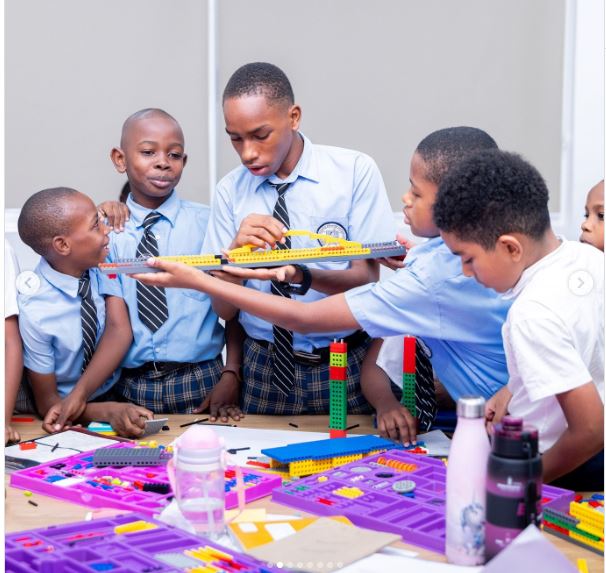
There are a number of solutions to the challenges outlined in this paper. Firstly, it is important to help Secondary School students develop a positive attitude towards Mathematics through the use of interactive methods of teaching and career guidance talks.
Secondly, the Government should build more school blocks to reduce class sizes and fairly provide enough resources to all public Secondary Schools. Further, teacher training institutions should be encouraged to introduce programmes aimed at training proper Secondary School Mathematics teachers. Parents should also be actively involved in helping their children practice Mathematics problems in their homes.